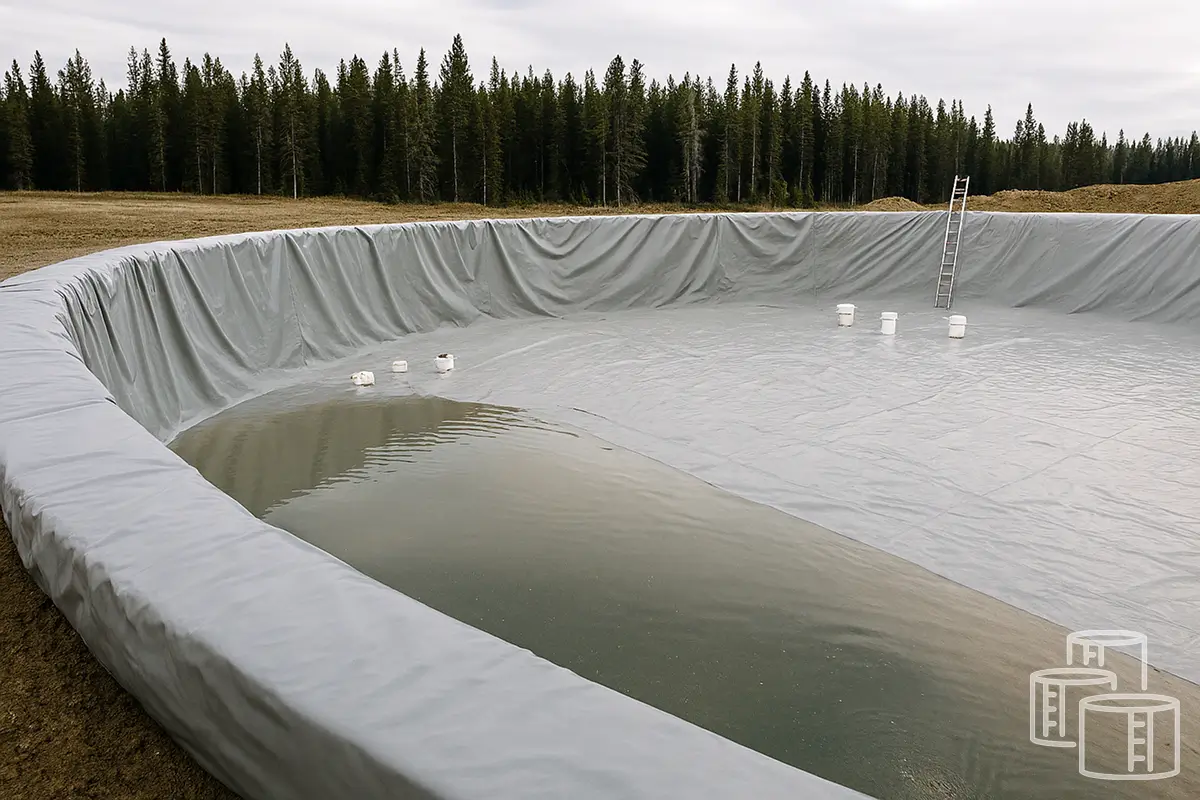
Mining dam liner systems play a critical role in preventing seepage, protecting surrounding environments, and maintaining operational integrity in large-scale resource projects. Unlike general water storage reservoirs, mining containment structures must withstand chemical exposure, heavy sediment loads, and extreme environmental conditions.
Properly engineered liner systems are essential for long-term containment performance in tailings dams, process water ponds, and containment basins.
Containment Challenges in Mining Operations
Mining environments present unique challenges that require specialized containment design. Tailings storage facilities and process water dams often contain chemically aggressive substances, suspended solids, and fluctuating water levels.
Key challenges include:
- Chemical exposure from processing agents
- Abrasion from sediment and slurry movement
- High hydrostatic pressure
- Temperature variation and UV exposure
- Long-term environmental compliance requirements
Mining dam liner systems must be engineered to address these risks without compromising structural stability.
Material Selection for Mining Dam Liner Systems
Material performance is central to the effectiveness of mining containment systems. Geomembrane liners used in mining applications are typically manufactured from high-performance polymers designed for chemical resistance and mechanical durability.
Common material options include:
- High-density polyethylene (HDPE) liners
- Reinforced geomembrane systems
- UV-stabilised liner materials
- Heavy-duty thickness configurations for tailings storage
Material selection depends on chemical composition, containment volume, expected service life, and environmental exposure.
Chemical Resistance and Environmental Protection
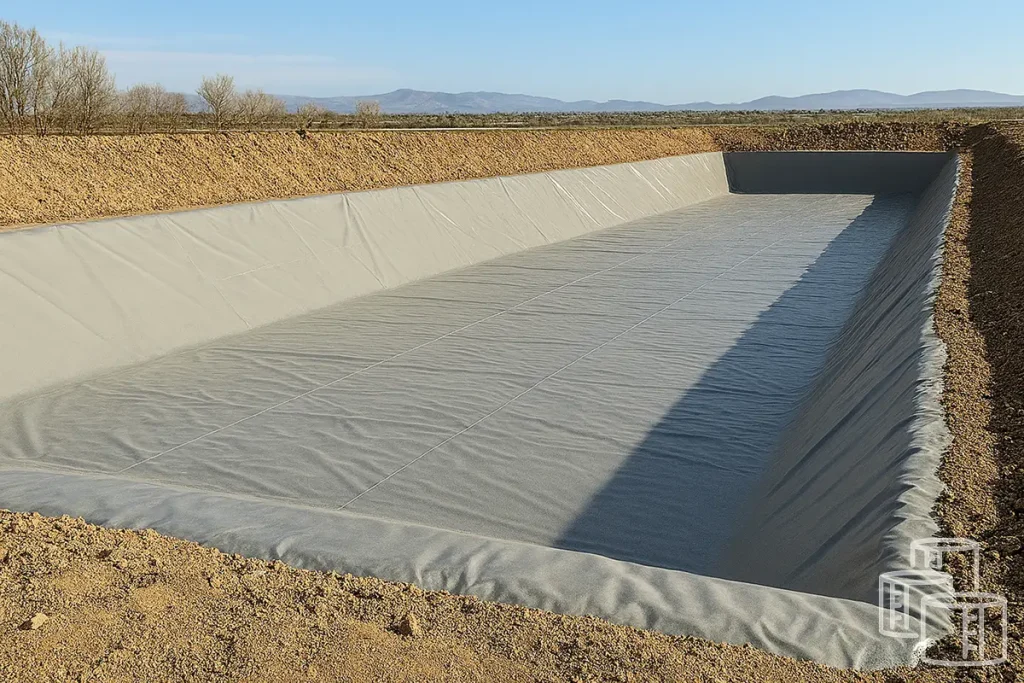
Mining containment systems must prevent contamination of surrounding soil and groundwater. Mining dam liner systems are designed to provide impermeable barriers that reduce seepage and protect nearby ecosystems.
Chemical resistance is particularly important where acidic or alkaline solutions are present. Proper liner specification ensures long-term resistance to degradation, stress cracking, and chemical attack.
Environmental compliance standards often require documented liner performance characteristics, installation quality assurance, and ongoing inspection procedures.
Structural Performance in Harsh Conditions
Large mining dams are subject to heavy loads, settlement, and ongoing structural stress. Liner systems must accommodate ground movement and operational variation without failure.
Critical design considerations include:
- Subgrade preparation and stabilization
- Seam welding integrity
- Anchorage systems
- Settlement accommodation
- Protection layers against puncture or abrasion
A well-designed mining dam liner system integrates material performance with structural engineering principles to ensure long-term containment security.
Further technical background on large-scale containment systems can be found in our water containment resources.
Conclusion
Mining dam liner systems are engineered to deliver secure, long-term containment in some of the most demanding industrial environments. From chemical resistance to structural stability, every component must be carefully specified to ensure environmental protection and operational reliability.
By combining advanced geomembrane materials with proper engineering design, mining containment structures can achieve dependable performance and regulatory compliance over extended service lifecycles.