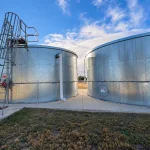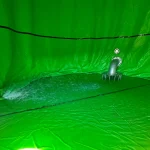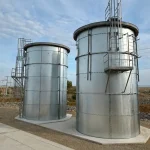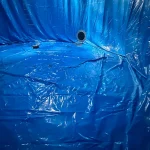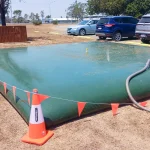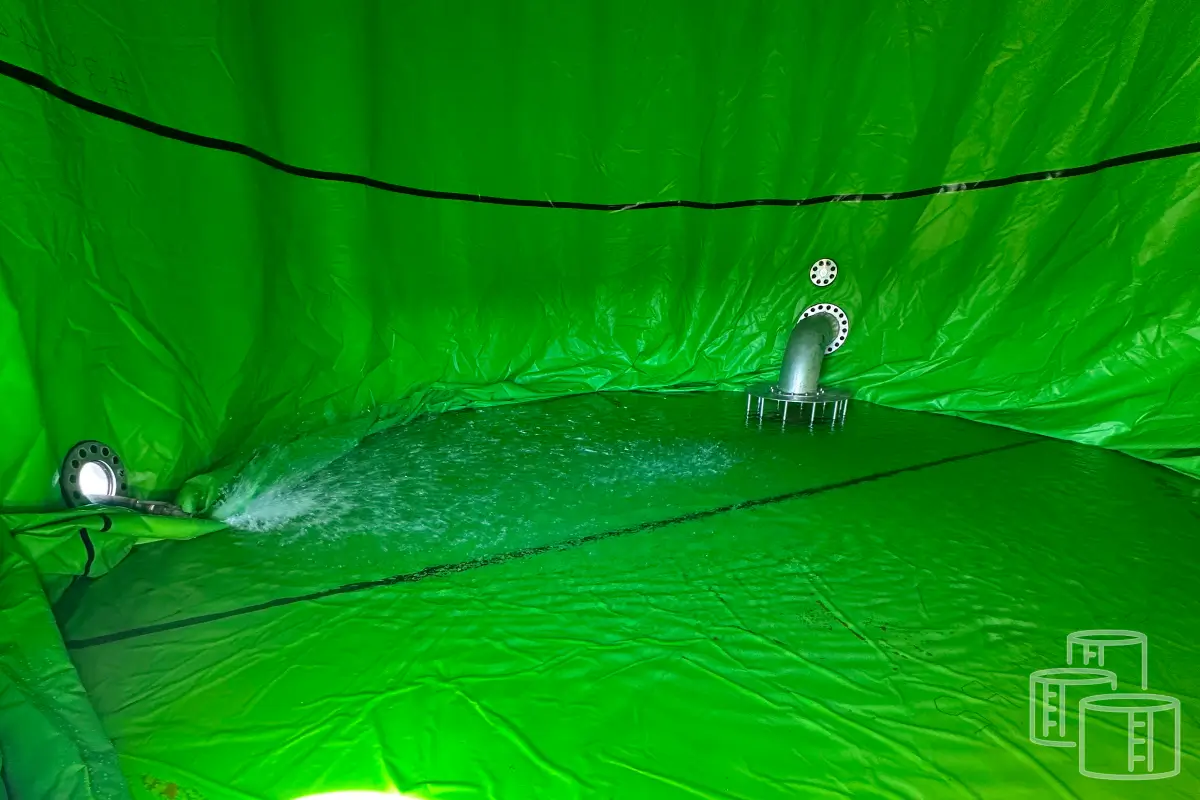
Fire water tanks play an important role in storing water for fire protection systems. However, the tank structure is only one part of the storage system. The internal lining can be equally important.
A tank liner creates a barrier between stored water and the tank structure. It helps contain water and protects vulnerable internal surfaces. Over time, liners can deteriorate, move, develop damaged areas, or fail around fittings and seams.
Some defects remain small and localised. Others can indicate broader deterioration that requires closer assessment. A fire water tank lining inspection focuses specifically on the condition and integrity of this protective barrier.
This guide explains what inspectors may examine and which areas deserve particular attention. It also covers common signs of deterioration and possible next steps.
What is a Fire Water Tank Lining?
A fire water tank lining is an internal barrier used to contain stored water. Depending on the tank design, the lining may also separate water from structural tank components. Tank liners are commonly manufactured from flexible materials designed for long-term water storage applications.
The exact liner material depends on the tank design, stored water, and required application. A liner should form a continuous barrier across the areas designed to retain water. This barrier includes more than the large visible surfaces.
Seams, corners, penetrations, outlets, and fittings are also important parts of the lining system. Damage in one small area can affect the performance of the wider system. For this reason, liner condition should be considered separately from the condition of the tank structure.
A tank may appear structurally sound while its internal lining shows deterioration. Similarly, a lining problem does not automatically mean the entire tank requires replacement.
Understanding this distinction is important when assessing fire water storage tanks.
Why does Fire Water Tank Lining Condition Matter?
A fire water tank must retain the required water supply when that water is needed. The lining contributes directly to that containment function. Damage can create pathways for water to escape from its intended storage area.
Small defects may initially produce limited or difficult-to-detect leakage. However, deterioration can progress if the underlying cause remains unresolved.
Escaping water may also reach parts of the tank that are normally protected from continuous moisture exposure. This can create additional maintenance concerns. Liner condition can also affect future repair decisions.
A single localised defect may require a different response from widespread material deterioration. Repeated problems across several locations may indicate a broader issue.
Regular observation and appropriate condition assessment can help identify changes before deterioration becomes more extensive. Good records also make those changes easier to recognise.
What can Damage a Fire Water Tank Liner?
Tank liners operate in demanding conditions for long periods. Several factors can contribute to deterioration.
Understanding these factors helps explain why particular areas receive more attention during a lining inspection.
Age and Material Deterioration
Liner materials can change as they age. Their flexibility, surface condition, or resistance to movement may gradually decline. The rate of deterioration depends on several factors.
These include liner material, installation quality, operating conditions, and environmental exposure. Age alone does not confirm that a liner has failed.
However, older materials may justify closer examination when other warning signs appear.
Movement and Mechanical Stress
Water creates significant forces within a storage tank. The liner must accommodate those forces while remaining correctly positioned.
Movement can concentrate stress around corners, seams, fittings, and other transitions. Repeated movement may eventually contribute to local wear or deformation.
Unusual folds, stretching, or displacement can therefore provide useful information during an assessment.
Damage Around Fittings and Penetrations
Pipe connections and other penetrations interrupt the continuous liner surface. These areas often contain additional seals, fixings, or interfaces.
That makes them particularly important during a fire water tank lining inspection. Poor sealing or movement around a penetration can create a potential leakage point.
The surrounding liner should also be examined for distortion, tearing, or unusual stress.
Installation Issues
The long-term performance of a liner can be influenced by its original installation. Incorrect positioning may create folds, excessive tension, or poorly supported areas.
Problems may not always become obvious immediately. Repeated operating stresses can make an existing weakness more noticeable over time.
Previous installation details can therefore provide useful context during later inspections.
Previous Repairs
A repaired liner should not automatically be considered defective. A correctly completed repair may continue performing effectively.
However, previous repair locations deserve attention during future assessments. Inspectors can check whether the repair remains stable and properly bonded or sealed.
Repeated repairs in the same area may indicate an underlying cause that requires further investigation.
Common Signs of Fire Water Tank Lining Problems
Liner deterioration can appear in several ways. Some signs are obvious, while others require closer inspection.
Common observations may include:
- Tears, punctures, or cuts in the liner.
- Failed, separating, or damaged seams.
- Unusual wrinkles or folds.
- Stretching around fittings or penetrations.
- Visible surface deterioration.
- Displacement from the intended position.
- Damage around corners or transitions.
- Deterioration of previous repair areas.
- Unexplained signs of water loss.
- Moisture appearing outside the intended containment area.
No single observation should automatically determine the condition of the entire liner. The location and extent of a defect also matter.
A small isolated defect presents a different situation from deterioration across several areas. The surrounding material should therefore be considered alongside the visible problem.
What does a Fire Water Tank Lining Inspection Look for?
A fire water tank lining inspection concentrates on the integrity of the lining system. The assessment should consider individual defects and the wider condition of the material.
Several areas can provide useful information.
Liner Surface Condition
Large liner surfaces can reveal general signs of ageing, wear, or physical damage. The inspector may look for punctures, tears, deformation, and other visible changes.
Unusual surface appearance can also justify closer examination. The objective is not simply to locate obvious holes.
The broader condition can indicate whether deterioration is isolated or more widespread.
Seams and Joints
Seams connect different sections of liner material. Their integrity is therefore important for maintaining a continuous water barrier.
A lining inspection may examine seams for separation, distortion, damage, or previous repairs. Changes around a seam can sometimes indicate movement or concentrated stress.
The surrounding material should also be considered. A seam problem may extend beyond the immediately visible defect.
Corners and Transitions
Corners can experience different stresses from large flat surfaces. Changes in direction can place additional demands on flexible liner materials.
Inspectors may examine these locations for folds, stretching, movement, or localised damage. Floor-to-wall transitions also deserve careful attention.
These areas can reveal how the liner has responded to long-term operating conditions.
Penetrations and Connections
Tank outlets, pipes, and fittings create interfaces within the lining system. These interfaces need to maintain their integrity while accommodating the surrounding components.
An inspection may examine the liner immediately around each penetration. Signs of stress, movement, deterioration, or leakage should receive closer attention.
Connections should also be considered alongside their surrounding seals and liner material.
Previous Repairs
Repair locations provide useful information about the liner’s history. An inspector may examine whether a previous repair remains secure.
The area around the repair should also be checked for new deterioration. Several repairs concentrated within one section can suggest a recurring problem.
That pattern may be more significant than one isolated historical repair.
Evidence of Leakage
Water loss can have several possible causes. The liner is one area that may require investigation when unexplained leakage occurs.
Visible liner damage can help identify a potential pathway. However, assumptions should be avoided without adequate assessment.
The location of moisture does not always reveal the original source. Water can travel before becoming visible.
Professional fire water tank lining inspections help identify liner damage before it develops into more extensive problems.
Which Areas of a Tank Liner Need Particular Attention?
Not every section of a liner experiences identical conditions. Certain areas can experience greater movement or more complicated interfaces.
These locations deserve particular attention during condition assessment.
They can include:
- Floor-to-wall transitions.
- Internal and external corners.
- Pipe penetrations.
- Tank outlets.
- Connections and fittings.
- Liner seams.
- Fixing points.
- Areas around previous repairs.
- Sections showing unusual folds.
- Locations with visible movement or stretching.
The surrounding area should also be examined when a defect is found. A visible tear may only represent the most obvious part of the problem.
Nearby material can reveal whether the damage is isolated. This wider assessment helps establish the actual extent of deterioration.
What Happens when Lining Damage is Found?
Finding liner damage does not automatically mean the entire lining requires replacement. The appropriate response depends on the defect and surrounding material. A small, localised issue may have a very different solution from widespread deterioration.
The first step is understanding the extent and likely cause of the damage. The affected area should be documented clearly. Its location, approximate size, and surrounding condition can provide useful information.
Photographs can also support future comparisons. Further assessment may then determine whether localised repair is appropriate. More extensive deterioration may require a broader response.
The underlying cause should also be considered. Repairing visible damage without addressing recurring movement may not resolve the original problem.
The same principle applies to repeated deterioration around fittings or penetrations. A successful response should consider both the defect and the conditions that contributed to it.
Fire Water Tank Liner Repair or Replacement?
The decision between repair and replacement should be based on liner condition. There is no single visible defect that answers every case.
Several factors can influence the decision.
Extent of Damage
One small damaged area may be suitable for localised repair. Numerous defects across the liner present a different situation.
The total affected area matters as much as individual defect size.
Location of the Defect
Some locations can be more difficult to repair effectively. Damage around penetrations, seams, or heavily stressed areas may require additional consideration.
Accessibility can also influence the repair approach.
Condition of Surrounding Material
A repair depends partly on the material around the damaged section. A local repair may be less suitable when surrounding material shows extensive deterioration.
This is why assessment should extend beyond the visible defect.
Liner Age
Age provides useful context when evaluating repair options. However, age should not be considered in isolation.
Actual material condition remains important. An older liner can show different deterioration patterns from a recently installed liner with localised damage.
Previous Repair History
One historical repair does not necessarily indicate a wider problem. Repeated repairs can tell a different story.
Multiple failures in similar locations may indicate recurring stress or another unresolved cause. Repair records can therefore support better condition assessment.
Expected Future Performance
The immediate defect is only part of the decision. The likely condition of the remaining liner should also be considered.
A repair should not be evaluated without considering the surrounding system. This broader approach helps distinguish isolated damage from progressive deterioration.
How is Lining Inspection Different from Fire Water Tank Inspection?
The two subjects are closely related, but they are not identical. A fire water tank inspection can consider the overall condition of the storage system. Its scope may include structural components and other tank elements.
A fire water tank lining inspection has a narrower focus. It concentrates specifically on the internal water containment barrier. This includes liner surfaces, seams, penetrations, corners, connections, and previous repair areas.
The distinction is useful when interpreting inspection findings. A structurally acceptable tank can still have a liner defect requiring attention. A liner defect also does not automatically indicate structural failure.
Separating these two assessments creates a clearer picture of tank condition. It also helps maintenance teams identify which component requires further attention.
Regular fire tank inspections help assess tank condition and identify areas requiring maintenance or further investigation.
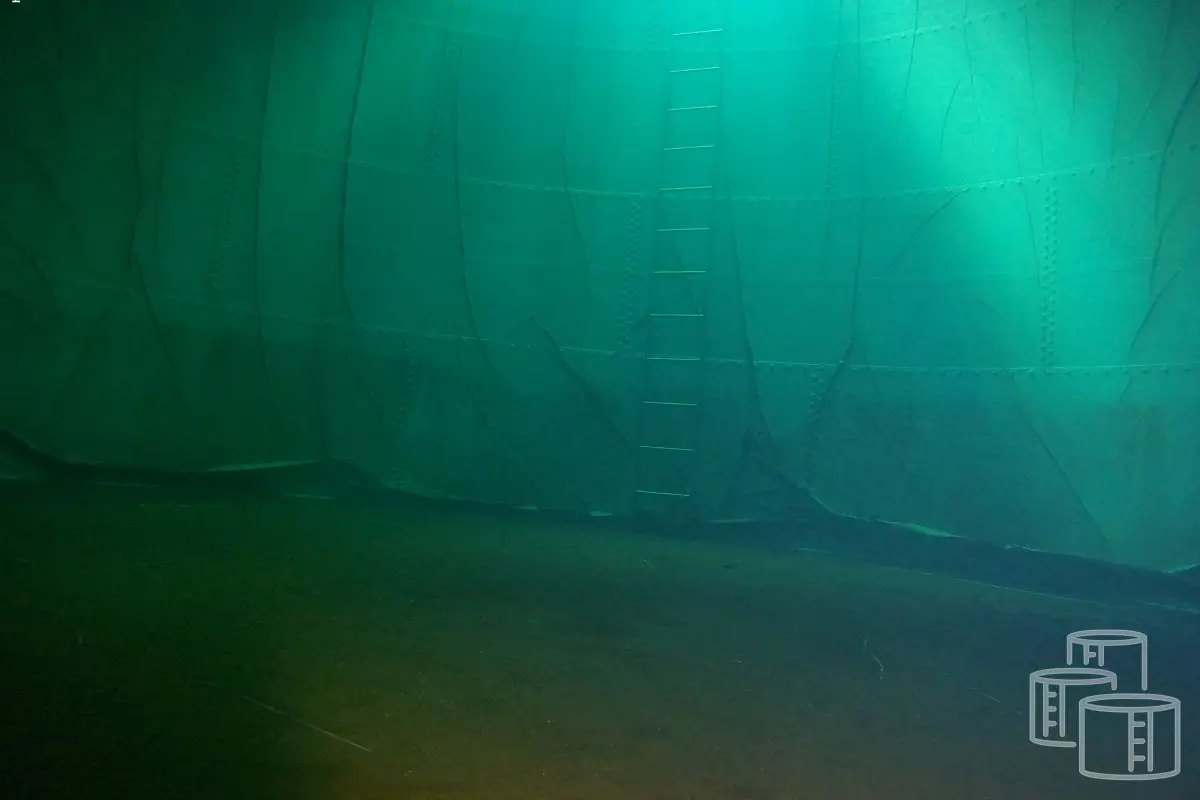
How often Should Fire Water Tank Linings be Checked?
There is no useful universal interval that applies to every tank and every situation. Inspection requirements can depend on applicable standards, system requirements, tank design, and maintenance procedures. The condition and history of the liner also matter.
A tank with previous liner problems may require different attention from a recently installed system. Unexpected water loss can also justify further investigation. The same applies after events that could affect the tank or its internal components.
Facility managers should follow the inspection and maintenance requirements applicable to their specific fire protection system. Manufacturer information and existing maintenance records can provide additional guidance.
The important point is consistency. Liner condition is easier to evaluate when current observations can be compared with reliable previous records.
Why Lining Inspection Records Matter
Good records turn individual inspections into a useful condition history. Without previous information, it can be difficult to determine whether a defect is stable or progressing.
Inspection records can include:
- Inspection dates.
- Photographs of liner condition.
- Locations of identified defects.
- Approximate defect dimensions.
- Details of previous repairs.
- Areas requiring future observation.
- Known liner material and age.
- Changes identified since earlier assessments.
Photographs are particularly useful when they show the same areas over time. They can reveal changes that might otherwise be difficult to remember.
Repair information should also remain connected with inspection records. This helps future inspectors understand why a particular area looks different.
It also helps identify repeated problems in the same location.
Understanding Australian standards for fire water storage can help facility managers plan appropriate inspection and maintenance activities.
Can Liner Problems be Prevented?
Not every form of deterioration can be prevented. Materials naturally age, and operating conditions can change. However, good management can reduce avoidable problems.
Correct installation is an important starting point. The liner should be appropriate for the tank design and intended application. Penetrations, seams, and fittings also require careful installation.
Maintenance teams should avoid unnecessary activities that could damage liner surfaces. Known defects should be investigated rather than ignored. Small changes can provide early information about developing problems.
Previous repair areas should remain part of future condition checks. Accurate records can also improve long-term maintenance decisions.
Prevention is therefore not one single action. It combines appropriate materials, installation, observation, maintenance, and documentation.
Understanding the Condition of a Fire Water Tank Liner
A fire water tank liner performs an important containment function. Its condition can change through ageing, movement, mechanical stress, or localised damage. Problems often develop around seams, corners, penetrations, fittings, and previously repaired areas.
A fire water tank lining inspection focuses attention on these vulnerable locations. It also considers whether deterioration is isolated or part of a broader pattern. Finding damage does not automatically mean the entire liner requires replacement.
The extent, location, surrounding material, and repair history all influence the appropriate response. Clear inspection records provide valuable context for future assessments.
They also help facility teams identify changes before small issues become more extensive. Understanding liner condition supports more informed maintenance decisions throughout the life of a fire water storage tank.