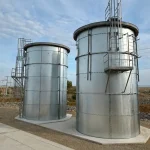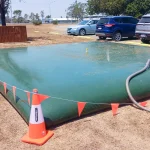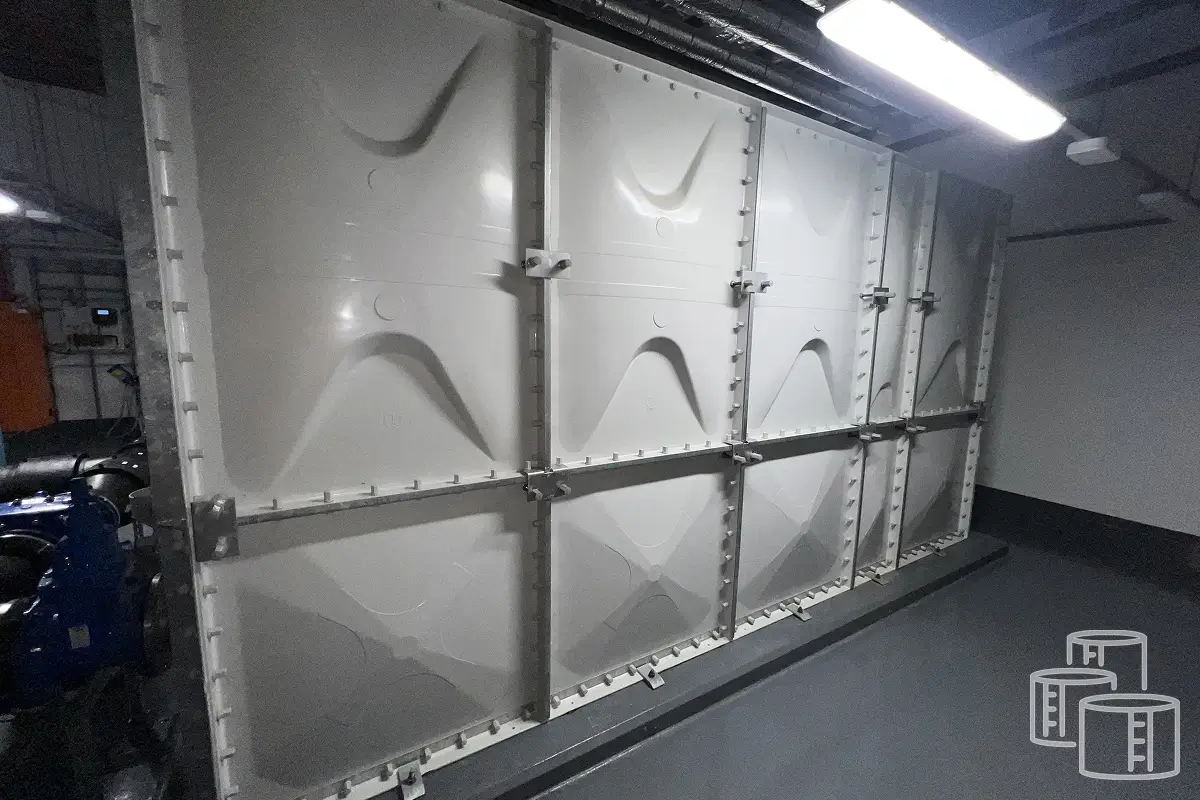
GRP panel tanks are widely used for storing potable, fire, commercial, and industrial water. Their modular construction provides flexibility for many sites and storage capacities. Glass Reinforced Plastic does not rust like conventional steel. However, this does not mean a GRP tank is maintenance-free.
A complete tank contains more than GRP panels. Seals, joints, bolts, supports, pipe connections, roof components, and foundations all affect its performance.
Many common problems in GRP panel tanks begin with these supporting components rather than the GRP material itself. Age, poor maintenance, installation issues, water conditions, and structural movement can all contribute.
Finding deterioration early can often make repairs simpler. Ignoring warning signs can allow a minor defect to become a larger problem. This guide covers common GRP tank problems, their causes, warning signs, inspection methods, repair options, and prevention.
For new installations or tank replacement projects, explore our GRP panel water tanks solutions for commercial and industrial water storage.
What Problems Can Develop in GRP Panel Tanks?
GRP tanks can develop different problems throughout their service life. Some are minor maintenance issues, while others may affect structural integrity or water containment.
Common issues include:
- Leaking panel joints
- Deteriorated seals and gaskets
- Corroded bolts and fasteners
- Internal support corrosion
- Cracked or damaged GRP panels
- Panel deformation or bulging
- Roof deterioration
- Pipe connection leaks
- Overflow problems
- Liner or membrane damage
- Foundation movement
- Sediment and contamination
The presence of one defect does not necessarily mean the tank needs replacement. The cause and extent of deterioration must first be assessed.
| Problem | Common Signs | Main Concern |
|---|---|---|
| Joint leaks | Drips, staining, wet areas | Water loss and seal failure |
| Damaged seals | Moisture around joints | Progressive leakage |
| Corroded fasteners | Rust or material loss | Weakened connections |
| Support corrosion | Rust and deterioration | Structural performance |
| Panel damage | Cracks or surface damage | Leakage and integrity |
| Panel deformation | Bulging or unusual shape | Structural loading |
| Roof problems | Sagging, cracks, openings | Structural and hygiene issues |
| Pipe connection problems | Leakage around fittings | Local stress and water loss |
| Liner problems | Tears or detachment | Loss of containment |
| Foundation issues | Movement or uneven support | Structural stress |
Understanding these warning signs helps determine when further GRP tank inspection is necessary.
1. Leaking Panel Joints
Leaks are among the most noticeable GRP tank problems. A modular tank contains multiple panels joined together with bolts and sealing materials. These connections must remain watertight throughout operation.
Over time, seals can lose flexibility or compression. Movement between panels can also affect joint performance.
A GRP tank leaking at a joint may show:
- Small drips
- Damp patches
- Water staining
- Mineral deposits
- Persistent moisture
- Increasing water loss
A small leak may appear harmless. However, continuous water exposure can affect nearby bolts, supports, foundations, and equipment. Recurring leakage can also indicate movement or another underlying problem.
Repair may involve replacing seals, correcting connections, or addressing structural movement. The actual cause should be identified before resealing the joint.
2. Deteriorated Seals and Gaskets
Seals are critical components within modular GRP tanks. They create watertight connections between individual panels and around certain fittings. Sealing materials can deteriorate because of age, temperature, water chemistry, compression changes, or installation conditions.
An ageing gasket may become harder, cracked, compressed, or less flexible. It can eventually stop maintaining an effective seal. Early signs include moisture around panel joints or occasional dripping. Seal deterioration is often repairable when identified early. However, widespread gasket failure can require more extensive work.
Replacing a visible seal without understanding why it failed may provide only a temporary solution.
3. Corroded Bolts and Fasteners
The GRP panels themselves do not experience conventional rust. However, GRP tank corrosion can still affect metallic components within the complete tank system.
Bolts, washers, fasteners, brackets, and supports may be exposed to moisture for long periods. Their corrosion resistance depends on material specification and operating conditions. Signs of fastener corrosion can include rust staining, surface deterioration, pitting, or visible material loss.
Corrosion should not be judged only by appearance. A heavily corroded fastener may no longer provide its intended mechanical performance. This can become more important where connections carry structural loads.
Replacement may be possible, but the surrounding components should also be inspected. If multiple bolts are deteriorating, the cause of corrosion should be investigated.
4. Internal Support Corrosion
Internal supports are an important part of many GRP panel tank systems. These components help the tank resist pressure created by stored water. Depending on tank design, internal structural components may be metallic. They can therefore deteriorate even while the GRP panels remain in good condition.
This is one reason external appearance alone cannot always confirm tank condition. Corrosion can affect rods, brackets, stays, fasteners, and other structural components. Advanced deterioration may reduce the capacity of the support system to perform as designed.
This can become a structural concern rather than a cosmetic maintenance issue. Suspected support deterioration should therefore receive professional assessment.
5. Cracked or Damaged GRP Panels
GRP is durable, but panels can still suffer physical damage. Possible causes include mechanical impact, abnormal loading, installation damage, structural movement, or unsuitable operating conditions.
Surface damage does not always indicate serious structural failure. However, deeper cracking or damage affecting reinforcement requires greater attention.
Warning signs include:
- Visible cracks
- Impact marks
- Surface splitting
- Damaged panel corners
- Leakage through the panel
- Changes around bolt holes
- Local deformation
A damaged GRP tank should be assessed according to the location and extent of damage. Some localised defects may be repairable. More significant damage may require panel replacement.
6. Panel Bulging and Deformation
GRP tank panels are designed to withstand specific water loads. Some panel shape is part of the original design. New or unusual deformation is different and should be investigated. Bulging can potentially relate to support problems, connection issues, foundation movement, or abnormal loading.
Changes should be compared with the tank’s original configuration where possible. Significant deformation should not simply be pushed back or adjusted without understanding its cause. The support system and surrounding panels may also require inspection.
Early assessment can determine whether the issue is localised or part of a broader structural problem.
7. GRP Tank Roof Problems
The roof is sometimes overlooked during routine GRP tank maintenance. However, it protects stored water and supports access, ventilation, and other tank components.
Potential roof problems include cracking, sagging, damaged panels, failed supports, loose connections, and poorly sealed openings. Standing water on the roof can also indicate drainage or deformation issues.
Roof deterioration can create more than a structural concern. Openings around damaged hatches, vents, or panels can increase the risk of debris entering the tank. For potable water storage, maintaining a secure tank envelope is particularly important.
Roof condition should therefore form part of regular inspections.
8. Pipe Connections and Fitting Problems
GRP tanks commonly contain several pipe connections.
These may include:
- Inlets
- Outlets
- Overflows
- Drains
- Pump connections
- Level equipment
- Other process connections
Leaks can develop around these fittings. However, a leak near a connection does not always mean the GRP panel itself has failed.
Unsupported pipework can transfer loads into the tank wall. Vibration, movement, or incorrect alignment can also create local stress. Connections should therefore be inspected together with surrounding pipe supports.
Repairing only the seal may not solve the problem if external pipework continues loading the tank.
9. Overflow Problems
Overflow systems protect tanks when water rises beyond the intended operating level. Problems can develop when overflow pipes become obstructed or filling controls fail. A faulty float valve or level sensor can allow continuous filling. Water may then discharge through the overflow system.
If the overflow cannot handle incoming flow, water may reach roof openings or other vulnerable areas. Repeated overflow can keep external supports, fasteners, and surrounding structures wet.
Overflow problems should therefore be investigated rather than treated as normal tank operation. The inlet controls, level system, overflow pipe, and discharge route may all require inspection.
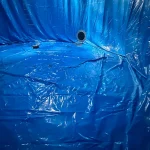
10. GRP Tank Liner Problems
Not every GRP panel tank uses a separate liner. However, some tank systems or refurbished installations may incorporate a liner or membrane for water containment. These components can develop their own problems.
Possible defects include:
- Tears
- Punctures
- Wrinkles
- Failed seams
- Detachment
- Material deterioration
- Leakage behind the liner
Damage can occur because of ageing, poor installation, mechanical contact, or movement. Water behind a liner can make the source of leakage more difficult to identify.
Repair depends on the liner material, location of damage, and overall condition. Widespread deterioration may make liner replacement more practical than repeated patch repairs.
11. Foundation and Base Problems
Not every apparent GRP tank problem begins with the tank. The supporting foundation plays an important role in structural performance. Uneven settlement can change how loads are distributed across the tank base.
Movement may place additional stress on panels, joints, connections, and supports. Potential warning signs include recurring joint leaks, visible movement, uneven gaps, or changes in panel alignment. Cracking or deterioration around the foundation should also be investigated.
Simply repairing recurring leaks may not solve the problem if foundation movement is the underlying cause.
12. Sediment and Internal Contamination
Water tanks can accumulate sediment over time. The amount depends on incoming water quality, tank use, turnover, and maintenance. Sediment is not necessarily a GRP material defect. However, excessive accumulation can indicate inadequate tank cleaning or poor water management.
Biofilm and other contamination can also become concerns in some water storage systems. Damaged roofs, poorly sealed access points, and unsuitable vents may allow external contamination to enter. Tank hygiene is particularly important for potable water storage.
Inspection and cleaning schedules should therefore match the tank application.

Why Do GRP Panel Tank Problems Develop?
GRP tanks do not usually develop problems for one single reason. Ageing is important, but it is only one factor.
Common contributing conditions include:
- Poor initial installation
- Insufficient maintenance
- Ageing seals and components
- Incorrect tank design
- Foundation movement
- Environmental exposure
- Water chemistry
- Mechanical impact
- Abnormal loading
- Unsupported pipework
- Corrosion of metallic components
- Previous inadequate repairs
- Poor drainage around the tank
Several factors may act together. For example, a small joint leak can keep a metallic component wet. Continued moisture can then accelerate corrosion. The resulting deterioration may eventually affect the connection itself.
This is why finding the root cause is more useful than repeatedly treating visible symptoms.
Are GRP Tank Problems Dangerous?
The level of risk varies significantly. A minor maintenance issue should not automatically be treated as structural failure. At the same time, serious warning signs should not be ignored.
Small staining around a fitting may require routine attention. Significant panel deformation requires a different response.
Problems that deserve prompt assessment include:
- Rapid water loss
- Significant panel cracking
- New panel deformation
- Severe support corrosion
- Structural movement
- Widespread joint leakage
- Damaged roof supports
- Foundation settlement
- Multiple deteriorated connections
Failure in a fire water tank can affect emergency water availability. Problems in potable tanks can create additional hygiene concerns. Industrial tank defects can interrupt operations or release stored water into surrounding areas.
Risk should therefore consider both tank condition and its function.
How to Inspect a GRP Panel Tank Yourself
A basic visual check can help identify warning signs between professional inspections. This does not replace a formal GRP tank inspection. Start by examining areas that can be viewed safely from outside the tank.
Check the External Panels
Look across the panel surfaces for visible changes. Pay attention to cracks, impact damage, staining, unusual deformation, and persistent wet areas.
Compare similar panels where possible. A noticeable difference may help identify a developing problem.
Check Panel Joints
Look for water around joints. Staining or mineral deposits may indicate intermittent leakage even when the area is dry during inspection.
Check whether the same problem appears across multiple joints. Repeated defects may indicate a broader issue.
Check Bolts and Fasteners
Look for visible corrosion, missing components, damaged washers, or unusual staining. Do not assume that all corrosion is superficial.
Significant material deterioration requires closer assessment.
Check Pipe Connections
Inspect around inlets, outlets, drains, and overflow connections. Look for leaks, movement, staining, or signs of stress around the fitting.
Also check whether nearby pipework appears adequately supported.
Check the Roof from a Safe Position
Look for obvious sagging, damage, open access points, or damaged fittings. Do not climb onto a tank unless the system is specifically designed for safe access.
Roof inspection should not create an additional safety risk.
Check Around the Tank Base
Look for standing water, staining, foundation cracks, or evidence of movement. Persistent water may indicate a leak or drainage problem.
Changes around the foundation deserve attention because they can affect tank support.
Review Tank Operation
Physical inspection is only one part of assessment. Changes in operation can provide additional warning signs.
Unexpected water loss, frequent refilling, overflow events, or unusual level readings can indicate developing problems. These observations should be recorded and investigated.
What Should You Not Inspect Yourself?
Internal tank inspection can involve significant hazards. Tanks can present confined-space, access, operational, and water quality risks. Entering a tank should not be treated as an ordinary visual inspection task.
Internal assessment should be completed by appropriately qualified personnel using suitable procedures. The same applies when inspection requires working at height or accessing structurally uncertain components.
A basic owner inspection should focus on safely observable warning signs.
How to Assess the Risk of GRP Tank Problems
A simple visual risk assessment can help determine how quickly professional attention may be required.
| Observation | Possible Concern | Typical Response |
|---|---|---|
| Minor staining | Early leak or previous moisture | Monitor and inspect |
| Small joint leak | Seal deterioration | Arrange repair assessment |
| Corroded fasteners | Connection deterioration | Assess affected components |
| Repeated leaks | Movement or widespread seal issues | Professional inspection |
| Roof damage | Structural or hygiene concern | Prompt assessment |
| Panel bulging | Support or loading problem | Professional assessment |
| Significant cracking | Panel damage | Prompt inspection |
| Foundation movement | Uneven structural loading | Structural assessment |
| Severe support corrosion | Reduced structural performance | Urgent professional assessment |
| Rapid water loss | Major leak or failure | Immediate investigation |
This table provides general guidance rather than a structural diagnosis.
Tank design, application, age, and operating conditions should also influence the response.
Can GRP Panel Tanks Be Repaired?
Yes. Many GRP panel tank repair projects can address localised deterioration without replacing the entire tank. One advantage of modular construction is that individual components may sometimes be repaired or replaced.
Depending on tank design and condition, repairs may involve:
- Replacing seals or gaskets
- Resealing panel joints
- Replacing bolts and fasteners
- Repairing suitable localised panel damage
- Replacing damaged panels
- Repairing roof components
- Replacing structural supports
- Repairing fittings
- Correcting pipework support
- Repairing or replacing liners
However, repairability depends on the specific tank. Accessibility, component availability, tank age, damage extent, and structural condition all matter.
A repair should address the cause rather than only the visible symptom.
GRP Tank Repair vs Replacement
Finding a defect does not automatically mean the tank should be replaced. Repair may be appropriate when deterioration is localised and the overall tank remains suitable for service.
For example, isolated gasket failure may be manageable without replacing otherwise sound panels. Replacement becomes more relevant when deterioration is widespread. This may include severe structural corrosion, extensive panel damage, recurring failures, major foundation problems, or multiple ageing systems.
Operational requirements should also be considered. An older tank may still be repairable but no longer meet the capacity or configuration required by the facility.
The decision should therefore consider condition, repair cost, future maintenance, downtime, and expected remaining service life.
How Long Do GRP Panel Tanks Last?
There is no single lifespan for every GRP tank. Two tanks of the same age can have very different conditions.
Service life depends on:
- Manufacturing quality
- Initial installation
- GRP material specification
- Water conditions
- Environmental exposure
- Structural loading
- Maintenance frequency
- Inspection history
- Quality of previous repairs
- Condition of metallic components
A well-maintained tank can remain serviceable for many years. Poor maintenance can shorten effective service life even when the main GRP panels remain in reasonable condition.
Age should therefore be considered together with actual tank condition. A condition-based assessment provides more useful information than age alone.
Age alone does not determine tank condition. Our guide how long do GRP panel tanks last explains the factors that influence long-term performance.
Can an Old GRP Tank Still Be Serviceable?
Yes. An older GRP tank does not automatically require replacement. The condition of its panels, supports, seals, fasteners, roof, fittings, and foundation is more informative than the installation date alone.
However, ageing increases the importance of regular inspection. Components can deteriorate at different rates.
A tank may have sound GRP panels but ageing seals and corroded internal supports. Another tank may have good supports but damaged panels or recurring joint leaks.
The complete system should therefore be assessed.
How to Prevent Common GRP Tank Problems
Preventive maintenance can reduce the likelihood of unexpected failures. The objective is to identify deterioration while repairs remain manageable.
Good practices include:
- Inspect external panels regularly.
- Investigate leaks early.
- Monitor seals and panel joints.
- Check accessible bolts and fasteners.
- Watch for unusual panel deformation.
- Maintain overflow systems.
- Keep pipework properly supported.
- Maintain roof components and access points.
- Check drainage around the tank.
- Monitor foundation condition.
- Clean the tank when required.
- Keep maintenance and repair records.
- Arrange professional inspections at appropriate intervals.
Small changes can provide useful early warnings. Repeated staining, new corrosion, or changing panel shape should not be ignored simply because the tank still holds water.
To understand why routine inspections are essential for detecting deterioration early, read the importance of regular water tank inspections.
How Can Maintenance Extend GRP Tank Lifespan?
Maintenance cannot prevent all ageing. However, it can stop minor defects from contributing to larger failures. Consider a small joint leak.
If identified early, the affected seal or connection may be repairable. If ignored, escaping water can continuously wet nearby metallic components. Corrosion may then develop around bolts or supports.
The same principle applies to pipework, roof defects, drainage, and overflow systems. Early intervention usually provides more options.
Regular water tank maintenance can help identify leaks, deteriorating seals, corrosion, and other issues before they become more serious.
When Should You Call a GRP Tank Specialist?
Professional assessment should be considered when the tank shows signs beyond routine external maintenance. Examples include repeated leaks, significant corrosion, panel deformation, cracks, damaged supports, or foundation movement.
Professional inspection is also useful when the internal condition is unknown. This becomes increasingly important for older tanks or systems with limited maintenance records.
A specialist can help determine whether the problem is localised or part of wider deterioration. They can also assess whether repair, component replacement, refurbishment, or complete tank replacement is more appropriate.
Critical water storage applications may require professional assessment sooner. Fire, potable, and industrial tanks can have operational requirements that make unplanned failure particularly disruptive.
Common Problems in GRP Panel Tanks: Final Thoughts
GRP is a durable and corrosion-resistant material for modular water storage. However, the condition of a GRP panel tank depends on much more than its panels. Seals, joints, bolts, internal supports, roof components, fittings, pipework, liners, and foundations can all develop problems.
Some defects begin with normal ageing. Others result from poor installation, environmental exposure, structural movement, inadequate maintenance, or unsuitable operating conditions. The most important step is early identification.
A minor GRP tank leak may require relatively straightforward attention. Significant deformation or structural corrosion can indicate a much more serious issue. Regular visual checks can help identify obvious warning signs. Professional GRP tank inspection provides a more detailed assessment when deterioration is suspected.
Many GRP tanks can also be repaired. Modular construction may allow seals, fasteners, panels, supports, and other components to be replaced individually. Replacement should therefore not be based on tank age alone.
The condition of the complete system, repair feasibility, operational requirements, and expected future performance should guide the decision.
Regular GRP tank maintenance, timely repairs, and condition-based inspections can help reduce unexpected failures and support a longer service life.