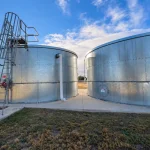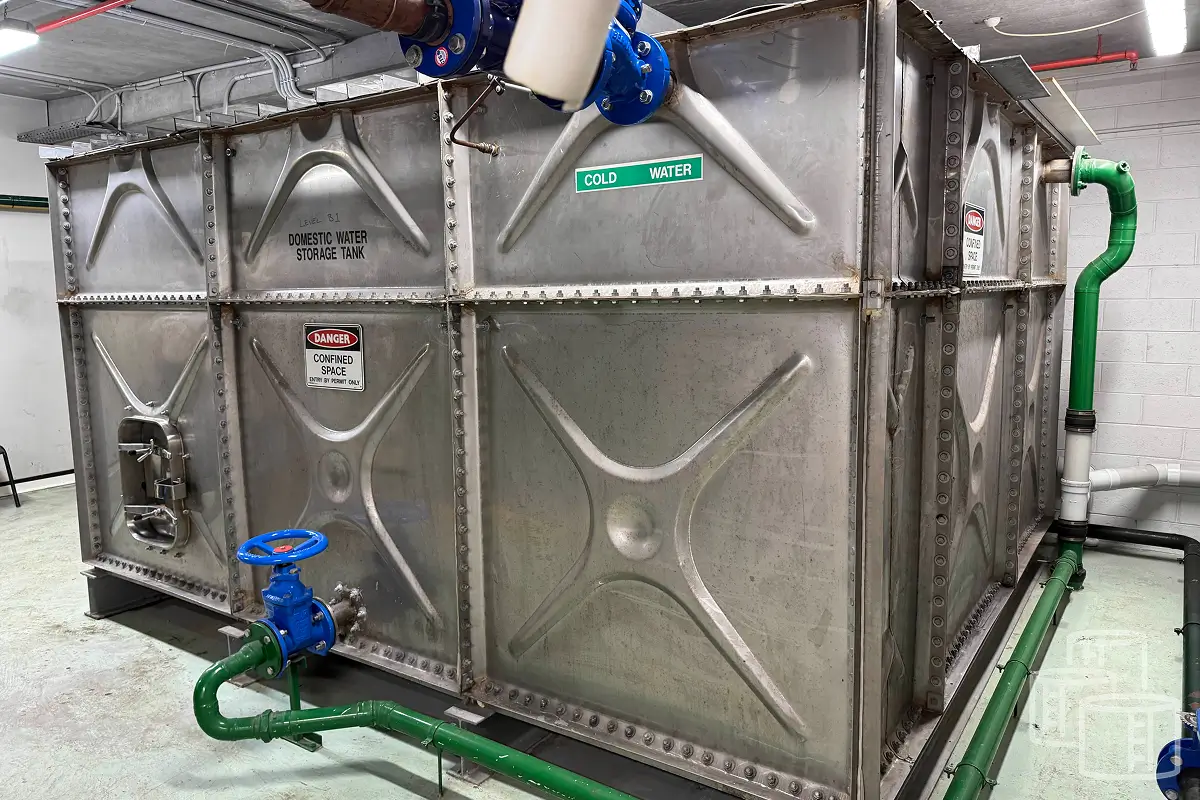
Stainless steel is widely used in water storage systems because of its durability, strength, and corrosion resistance. However, different stainless steel grades offer different levels of protection under specific operating conditions.
Two commonly used grades are 304 and 316 stainless steel. Both are suitable for various water storage applications, but their chemical compositions affect their performance.
Grade 304 is often suitable for freshwater storage under relatively mild conditions. Grade 316 offers improved resistance to certain corrosive environments, particularly those containing chlorides.
Choosing between these materials requires careful consideration of water chemistry, operating temperature, environmental exposure, and maintenance requirements.
Understanding these differences helps engineers and facility managers select appropriate materials for water storage systems. This guide explores the properties, corrosion resistance, applications, and performance differences between 304 and 316 stainless steel.
What is 304 Stainless Steel?
Grade 304 is an austenitic stainless steel commonly used in water storage, food processing, and industrial equipment. It contains chromium and nickel, which contribute to its corrosion resistance and mechanical properties.
Its typical chemical composition includes:
-
Chromium: 18–20%.
-
Nickel: 8–10.5%.
-
Carbon: Maximum 0.08%.
-
Iron: The remaining balance.
-
Small amounts of manganese, silicon, and other elements.
Chromium is particularly important because it forms a protective oxide layer on the steel surface. This thin layer, known as a passive film, helps prevent corrosion when the material contacts oxygen and moisture.
The passive film can naturally reform after minor surface damage when suitable conditions are present. Grade 304 also offers good weldability and fabrication properties. It can be formed into panels, fittings, and other water storage components.
These characteristics make it a practical material for many freshwater storage applications.
Common Applications of 304 Stainless Steel
Grade 304 is frequently used where water chemistry and environmental conditions are relatively mild.
Typical applications include:
-
Potable water storage systems.
-
Commercial water storage tanks.
-
Industrial freshwater storage.
-
Food processing equipment.
-
Water distribution components.
-
General-purpose storage vessels.
Its suitability depends on the actual operating environment. For example, freshwater with low chloride concentrations generally presents fewer corrosion risks than saline water.
However, unsuitable cleaning chemicals, surface contamination, and poor joint design can still cause corrosion. Grade 304 should therefore be selected according to water quality and expected operating conditions.
What is 316 Stainless Steel?
Grade 316 is another austenitic stainless steel used in industrial and water-related applications. Its main difference from grade 304 is the addition of molybdenum.
This alloying element improves resistance to certain forms of localised corrosion.
Its typical chemical composition includes:
-
Chromium: 16–18%.
-
Nickel: 10–14%.
-
Molybdenum: 2–3%.
-
Carbon: Maximum 0.08%.
-
Iron: The remaining balance.
Molybdenum improves resistance to pitting and crevice corrosion, particularly in environments containing chlorides. These properties make grade 316 useful where water chemistry presents greater corrosion challenges.
However, grade 316 is not completely corrosion-proof. High chloride concentrations, elevated temperatures, and poorly designed joints can still damage its protective surface.
Its performance depends on material selection, fabrication quality, and operating conditions.
Common Applications of 316 Stainless Steel
Grade 316 is often considered for applications requiring additional corrosion resistance.
Examples include:
-
Water storage systems exposed to elevated chloride concentrations.
-
Industrial process water storage.
-
Water treatment equipment.
-
Coastal installations with marine atmospheric exposure.
-
Certain chemical processing applications.
-
Storage systems requiring additional corrosion protection.
Grade 316 may provide advantages when grade 304 approaches its corrosion resistance limits. However, neither grade should be selected without considering the specific operating environment.
304 vs 316 Stainless Steel: Main Differences
Both grades belong to the austenitic stainless steel family. They share several physical and mechanical properties. However, differences in chemical composition affect their performance in specific environments.
| Property | 304 Stainless Steel | 316 Stainless Steel |
|---|---|---|
| Main alloying elements | Chromium and nickel | Chromium, nickel, and molybdenum |
| Molybdenum content | No intentional addition | Typically 2–3% |
| General corrosion resistance | Good | Good |
| Chloride corrosion resistance | Lower | Higher |
| Pitting resistance | Lower | Higher |
| Crevice corrosion resistance | Lower | Higher |
| Weldability | Good | Good |
| Typical material cost | Lower | Higher |
| Freshwater applications | Often suitable | Often suitable |
| More aggressive water conditions | Requires careful assessment | Offers additional resistance |
The most important distinction is the presence of molybdenum in grade 316. This addition improves resistance to localised corrosion without significantly changing the material’s basic structural characteristics.
However, selecting a higher alloy grade does not automatically guarantee better overall tank performance. Design quality, water chemistry, and maintenance remain important for both materials.
How does Corrosion Resistance Differ Between 304 and 316?
Corrosion resistance is one of the main considerations when comparing stainless steel grades. Although stainless steel resists many corrosive environments, it can still experience localised damage.
The most relevant corrosion mechanisms for water storage include:
-
Pitting corrosion.
-
Crevice corrosion.
-
Stress corrosion cracking.
-
Galvanic corrosion.
-
Surface corrosion caused by contamination.
Different environmental conditions influence each mechanism.
Pitting Corrosion
Pitting corrosion creates small, localised cavities in a metal surface. These cavities develop when the protective passive layer breaks down in specific locations.
Chloride ions are a common contributor to this process. Pitting can be difficult to identify during early development because surface damage may appear relatively minor. However, localised penetration can eventually compromise the integrity of tank components.
Grade 316 offers greater resistance to chloride-induced pitting because it contains molybdenum. Grade 304 can still perform effectively in suitable freshwater environments.
The risk depends on chloride concentration, temperature, surface condition, and other operating factors.
Crevice Corrosion
Crevice corrosion develops in narrow spaces where water becomes trapped and local conditions change.
These spaces can occur around:
-
Bolted connections.
-
Washers and fasteners.
-
Panel joints.
-
Gaskets and seals.
-
Deposits on internal surfaces.
-
Poorly finished welds.
Restricted water movement can allow aggressive substances to concentrate inside these areas. The resulting conditions may damage the protective passive layer.
Grade 316 generally provides better resistance to this process than grade 304. However, even grade 316 can experience crevice corrosion under sufficiently aggressive conditions.
Good joint design and regular cleaning help reduce these risks.
Stress Corrosion Cracking
Stress corrosion cracking occurs when susceptible materials experience tensile stress within particular corrosive environments. For austenitic stainless steels, elevated temperatures and chloride exposure can increase this risk.
Tensile stresses may originate from:
-
Welding operations.
-
Fabrication processes.
-
Mechanical loading.
-
Residual stresses.
-
Thermal expansion.
Both 304 and 316 stainless steel can experience chloride stress corrosion cracking. Grade 316 should not be considered a complete solution to this problem.
High-temperature or highly aggressive applications may require alternative alloys and specialist engineering assessment.
How does Chloride Concentration Affect Stainless Steel Tanks?
Chloride concentration is an important factor when selecting stainless steel for water storage. Chlorides occur naturally in many water sources. Their concentrations vary according to geography, treatment methods, and surrounding environmental conditions.
Water from coastal regions, groundwater sources, or industrial processes may contain elevated chloride levels. Higher concentrations can increase the likelihood of pitting and crevice corrosion.
However, chloride concentration alone does not determine whether corrosion will occur.
Other factors include:
-
Water temperature.
-
Water pH.
-
Dissolved oxygen.
-
Surface cleanliness.
-
Water circulation.
-
Deposits and sediment.
-
Tank design.
-
Chemical treatment methods.
Published engineering guidance sometimes provides approximate chloride ranges for stainless steel selection. However, these values depend on temperature, water chemistry, and exposure conditions.
There is no single chloride concentration that guarantees safe performance for either grade. Corrosion can occur at relatively low concentrations when local conditions are unfavourable.
For example, stagnant water and accumulated deposits may increase corrosion risks around joints. A water analysis should therefore support material selection for applications with uncertain water chemistry.
Does Water Temperature Affect 304 and 316 Stainless Steel?
Temperature can significantly influence corrosion behaviour. As water temperature increases, certain corrosion reactions become more aggressive. Higher temperatures can also increase the risk of chloride-related stress corrosion cracking.
Both grades generally perform well in many cold-water storage applications. However, heated water requires additional assessment.
Potential concerns include:
-
Increased pitting susceptibility.
-
Greater risk of crevice corrosion.
-
Concentration of dissolved salts.
-
Thermal stresses around joints.
-
Stress corrosion cracking.
The combined effects of temperature and chloride concentration are particularly important. For example, a material suitable for cold freshwater may require reassessment when used with heated process water.
Grade 316 offers improved resistance to some corrosion mechanisms, but temperature still influences its performance. For demanding heated-water applications, engineers may consider duplex stainless steels or other specialised materials.
The final decision should reflect actual operating temperatures and water chemistry.
304 vs 316 Stainless Steel for Potable Water Storage
Potable water storage requires materials that can maintain suitable water quality throughout normal operation. Both 304 and 316 stainless steel are commonly used in drinking water applications. Their corrosion resistance and relatively smooth surfaces make them suitable for many water-contact components.
However, material grade alone does not establish compliance with drinking water requirements. Australian water storage systems must consider applicable drinking water standards and material suitability. AS/NZS 4020 addresses the testing of products intended for contact with drinking water.
The Australian Drinking Water Guidelines also emphasise suitable materials and appropriate water quality controls.
Important considerations include:
-
Material suitability for drinking water contact.
-
Water chemistry and chloride concentration.
-
Gasket and seal materials.
-
Internal surface condition.
-
Cleaning and disinfection procedures.
-
Potential contamination from fittings.
-
Appropriate inspection and maintenance.
The complete tank assembly should be assessed, rather than considering stainless steel panels alone. For example, seals, fittings, and joining materials may also contact stored drinking water. Their suitability can influence overall water quality.
Is 316 Stainless Steel Always Better for Drinking Water?
Not necessarily. Grade 316 provides additional corrosion resistance, but many drinking water systems operate under relatively mild conditions. Grade 304 may provide suitable performance when water chemistry and operating conditions are appropriate.
Using grade 316 in every application may increase material costs without providing a meaningful operational advantage. However, elevated chloride concentrations or challenging environmental conditions may justify the additional protection.
Material selection should reflect the actual requirements of the storage system.
How do 304 and 316 Compare in Coastal Environments?
Coastal environments can expose stainless steel to airborne salts and moisture. Salt deposits may accumulate on external tank surfaces, especially in sheltered areas. These deposits can create conditions that encourage localised corrosion.
The risk depends on several factors:
-
Distance from the coastline.
-
Exposure to salt spray.
-
Prevailing wind conditions.
-
Rainfall and natural surface washing.
-
Surface finish.
-
Cleaning frequency.
-
Equipment design.
Grade 316 generally offers better resistance to marine atmospheric exposure than grade 304. Its molybdenum content provides additional protection against chloride-related corrosion. However, coastal exposure does not automatically require grade 316 in every application.
The severity of the environment should be evaluated. Direct seawater contact presents a different challenge from exposure to coastal air. Neither standard 304 nor 316 stainless steel should be assumed suitable for continuous seawater immersion.
More corrosion-resistant alloys may be necessary for such conditions.
How does Fabrication Affect Stainless Steel Tank Performance?
Material selection is only one part of reliable tank construction. Fabrication methods can significantly influence the corrosion resistance of finished components.
Poor fabrication practices may damage the protective surface or introduce contamination. Even correctly specified stainless steel can develop corrosion problems when workmanship is inadequate.
Welding and Heat-Affected Areas
Welding exposes stainless steel to high temperatures. These temperatures can affect the material’s surface condition and corrosion resistance. Heat tint may form around welded joints.
If not appropriately removed, heat tint can reduce local corrosion resistance. Suitable welding procedures and post-weld cleaning help maintain material performance. Low-carbon grades, including 304L and 316L, are often considered for welded components.
Their reduced carbon content helps limit sensitisation during welding. Sensitisation can increase susceptibility to certain forms of intergranular corrosion.
The appropriate grade and welding procedure depend on the component design and fabrication requirements.
Surface Contamination
Stainless steel surfaces can become contaminated during manufacturing, transport, or installation. Contact with carbon steel tools or particles may introduce iron contamination. This contamination can produce visible rust staining.
Such staining does not necessarily indicate corrosion of the underlying stainless steel. However, contamination should be investigated and removed using suitable procedures.
Good fabrication practices include:
-
Using dedicated stainless steel tools.
-
Preventing contact with carbon steel debris.
-
Protecting finished surfaces during transport.
-
Removing welding residues.
-
Applying suitable cleaning and finishing procedures.
-
Inspecting joints before commissioning.
These practices help preserve the intended corrosion resistance of both grades.
What Role does Tank Design Play in Material Selection?
Tank design influences how stainless steel performs during operation. The same material may behave differently in two systems with different structural arrangements.
Important design considerations include water movement, joint configuration, drainage, and accessibility.
Panel Connections and Sealing
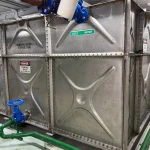
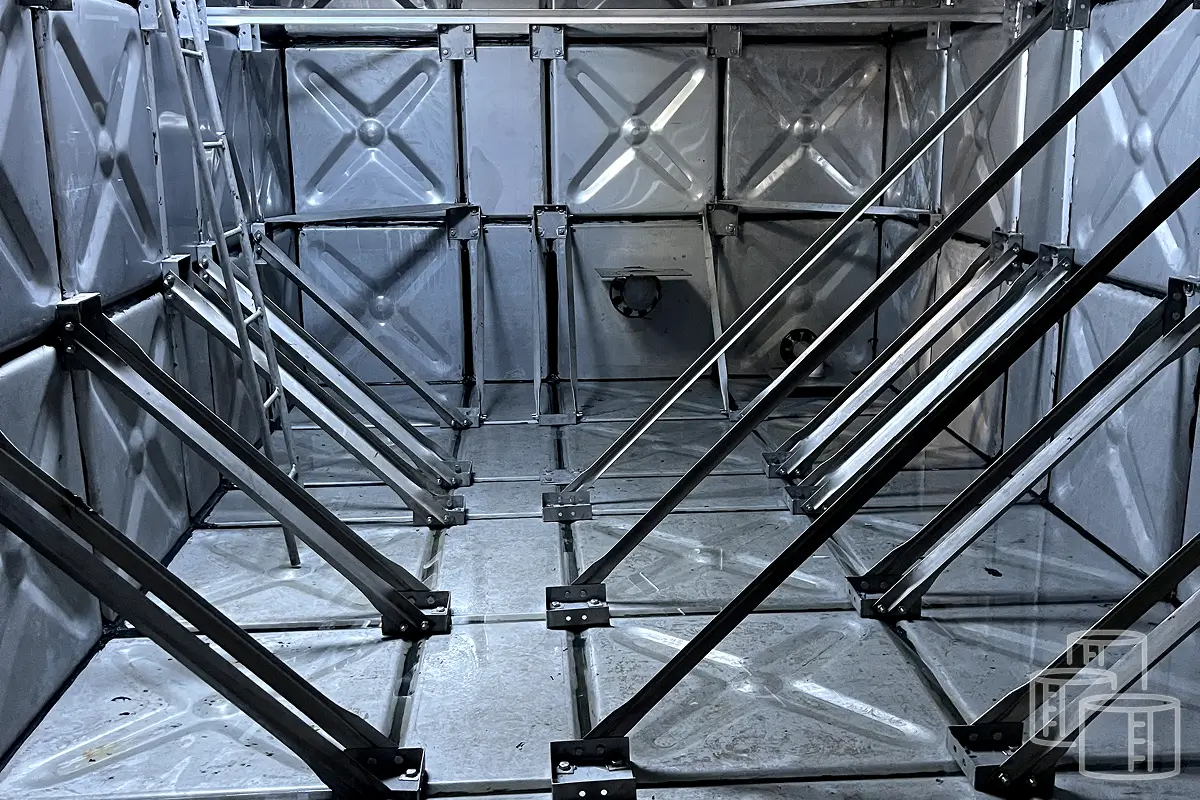
Sectional water tanks contain multiple connected components. Their joints must provide structural stability and maintain watertight performance. Bolted connections and sealing arrangements require careful design.
Poorly configured joints may create areas where water becomes trapped. These conditions can increase crevice corrosion risks.
Suitable gaskets, fasteners, and joint geometry help reduce potential problems. Material compatibility should also be considered when different metals contact one another.
For more information about sectional tank construction, explore stainless steel panel tanks.
Drainage and Water Movement
Water movement affects the accumulation of sediment and dissolved substances. Stagnant areas may encourage deposits and create unfavourable local conditions. Tank designs should minimise unnecessary water traps where practical.
Drainage arrangements should also support cleaning and maintenance.
Effective design considerations include:
-
Accessible internal surfaces.
-
Suitable drainage points.
-
Reduced sediment accumulation.
-
Appropriate joint placement.
-
Practical inspection access.
-
Compatible fittings and fasteners.
These features can improve long-term performance regardless of stainless steel grade.
Is 316 Stainless Steel More Durable than 304?
Durability depends on the environment in which a material operates. Both grades offer good mechanical properties and corrosion resistance. In mild freshwater conditions, their service performance may be similar.
Grade 316 can provide a durability advantage when chloride-related corrosion is a significant concern. However, the additional alloying elements do not eliminate every possible deterioration mechanism.
Factors influencing long-term durability include:
-
Water chemistry.
-
Operating temperature.
-
Fabrication quality.
-
Structural loading.
-
Surface condition.
-
Inspection frequency.
-
Cleaning procedures.
-
Environmental exposure.
A well-designed grade 304 tank may perform better than a poorly fabricated grade 316 tank. Consequently, material grade should not be considered independently from overall system quality.
There is also no universal service-life figure that applies to every stainless steel water tank. Expected performance should be evaluated using the specific operating conditions and maintenance requirements.
What are the Maintenance Differences Between 304 and 316?
Both grades generally require relatively limited maintenance compared with many unprotected carbon steel applications. However, stainless steel tanks are not maintenance-free.
Regular inspections help identify contamination, corrosion, deposits, and joint deterioration. Grade 316 may provide greater resistance to certain corrosive conditions.
This does not remove the need for appropriate cleaning and inspection.
Recommended Maintenance Considerations
Routine maintenance may include:
-
Inspecting accessible internal surfaces.
-
Checking joints and seals.
-
Removing accumulated sediment.
-
Monitoring water chemistry.
-
Investigating unusual staining.
-
Inspecting areas around fittings.
-
Checking for signs of localised corrosion.
-
Reviewing cleaning chemical compatibility.
Cleaning methods should be suitable for the stainless steel grade and stored water application. Aggressive chemicals can damage protective surfaces when used incorrectly. For example, concentrated hypochlorite solutions can create corrosion risks under certain conditions.
Cleaning procedures should follow relevant manufacturer recommendations and operational requirements. Regular maintenance also helps identify problems before they affect tank performance.
How do the Costs of 304 and 316 Stainless Steel Compare?
Grade 316 generally has a higher initial material cost than grade 304. This difference is largely associated with its alloy composition.
Nickel and molybdenum contribute to material pricing. However, the final cost of a water storage system depends on more than raw material prices.
Other factors include:
-
Material thickness.
-
Tank dimensions.
-
Fabrication complexity.
-
Welding requirements.
-
Surface finishing.
-
Structural supports.
-
Installation conditions.
-
Maintenance requirements.
Grade 304 may offer an economical solution when the operating environment is suitable. Grade 316 may justify its additional cost when greater corrosion resistance is required. Selecting a lower-cost material without evaluating water chemistry can create future performance risks.
Conversely, specifying grade 316 unnecessarily may increase costs without delivering proportional benefits. The appropriate choice balances technical suitability with long-term operational requirements.
How to Choose Between 304 and 316 Stainless Steel
Selecting a stainless steel grade requires a structured assessment of operating conditions. The following considerations help identify the most suitable material.
1. Analyse Water Quality
Determine the chemical characteristics of the stored water. Pay particular attention to chloride concentration, pH, and relevant treatment chemicals.
Water quality can vary between sources and operating periods.
2. Assess Operating Temperature
Identify normal and maximum operating temperatures. Heated water may increase certain corrosion risks.
Temperature should be considered alongside chloride concentration.
3. Evaluate Environmental Exposure
Consider whether the tank will operate indoors, outdoors, or near the coast. External salt deposits and moisture may affect exposed surfaces.
4. Review Fabrication Requirements
Examine welding, panel connections, and surface finishing requirements. Suitable fabrication methods help maintain corrosion resistance.
5. Consider Maintenance Accessibility
Determine whether internal surfaces and critical joints can be inspected. Accessible designs make cleaning and maintenance easier.
6. Compare Long-Term Requirements
Evaluate material costs alongside expected operating conditions. The lowest initial cost does not always provide the most suitable long-term solution.
7. Obtain Technical Assessment when Necessary
Complex water chemistry or elevated temperatures may require specialist advice. Engineers should assess demanding applications before finalising material specifications.
Conclusion
Grades 304 and 316 stainless steel are both suitable for many water storage applications. Their main difference is the improved localised corrosion resistance provided by molybdenum in grade 316.
Grade 304 often performs well in freshwater systems with relatively mild operating conditions. Grade 316 offers additional protection where chloride exposure or environmental conditions create greater corrosion risks.
However, material selection should never rely on stainless steel grade alone. Water chemistry, temperature, fabrication quality, tank design, and maintenance all influence long-term performance.
Understanding these factors supports more informed material selection and reliable water storage system design.