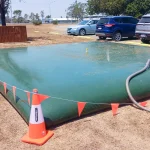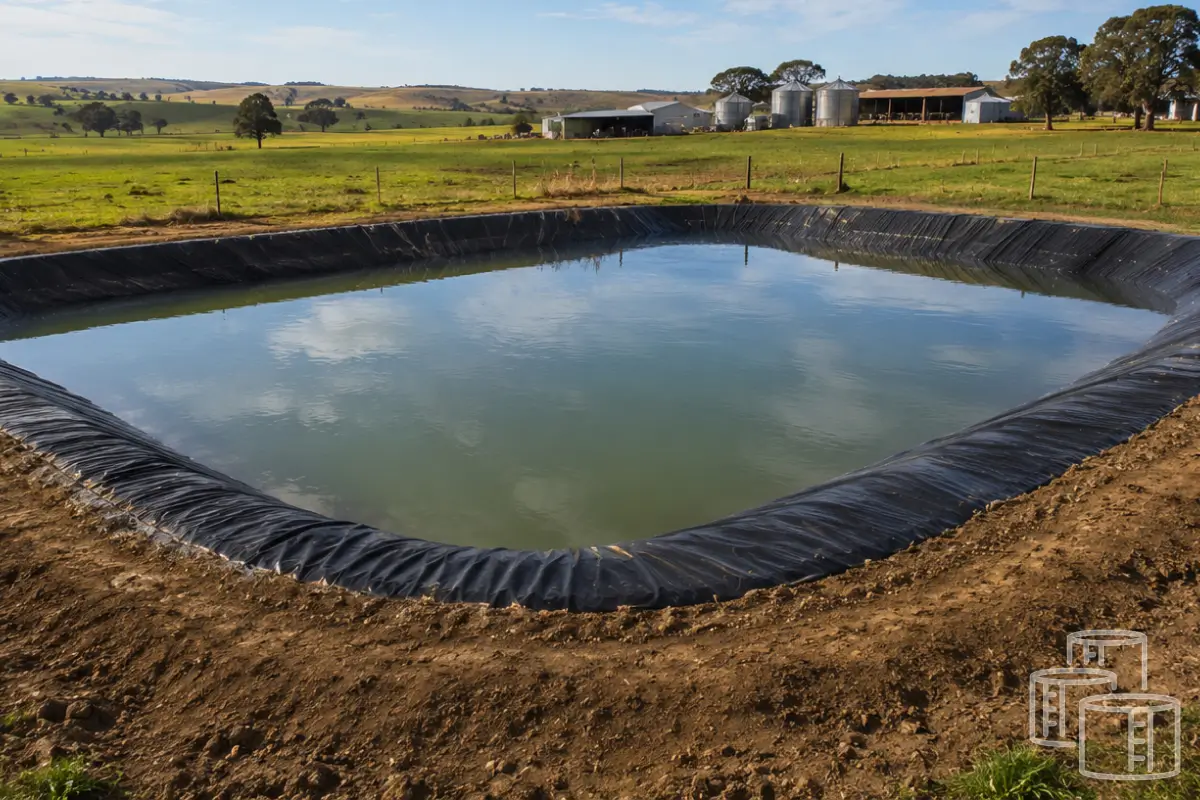
Water storage systems need to hold water reliably while limiting losses into the surrounding ground. However, natural soil is not always suitable for creating a watertight storage area. Sandy, fractured, rocky, or highly permeable ground can allow significant seepage.
This is where dam liners and pond liners become useful. A liner creates a barrier between stored water and the surrounding soil. It helps control seepage and protect the storage structure. Liners are used across agriculture, mining, energy, stormwater management, and industrial water storage.
Different applications require different liner materials, thicknesses, designs, and installation methods. This guide explains how liners work and where they are commonly used. It also covers materials, inspections, maintenance, costs, and Australian requirements.
What are Dam and Pond Liners?
Dam and pond liners are barrier systems installed inside water storage structures. Their main purpose is to reduce water movement through the base and sides of the storage area. Most modern liners use low-permeability synthetic materials called geomembranes.
For reliable water containment, professionally designed and installed dam and pond liners for water storage can provide a durable solution tailored to specific site conditions.
Other systems may use compacted clay, geosynthetic clay, or several barrier layers together. A liner can be installed in a new storage structure. It can also help address seepage in an existing dam.
Common applications include:
- Farm dams
- Irrigation ponds
- Process water ponds
- Mining water storage
- Evaporation ponds
- Stormwater basins
- Bioretention systems
- Wastewater ponds
- Industrial containment areas
- Emergency water storage
The correct system depends on what the structure contains and how it operates.
How do Pond Liners and Dam Liners Work?
A liner creates a low-permeability layer across the storage surface. Without this barrier, water can move through pores, cracks, and channels within the soil.
The liner separates the stored liquid from these pathways.
A typical lined system can include:
- A prepared subgrade.
- A protective geotextile layer.
- The main geomembrane liner.
- Welded or sealed liner joints.
- Anchoring around the perimeter.
- Protective layers where required.
- Drainage or leak detection components for specialised applications.
The exact configuration depends on the site’s risks. For example, a farm dam may need a relatively simple liner system. A mining facility may require several containment liners and leak detection layers.
The liner must also remain stable as water levels rise and fall. Good design considers movement, pressure, settlement, temperature, UV exposure, and possible mechanical damage.
Why are Dam and Pond Liners Used?
The most obvious purpose is preventing excessive seepage. However, liners can perform several other important functions.
Reduced Water Loss
Permeable soils can allow stored water to escape into surrounding ground. A liner provides a controlled barrier and helps retain more usable water.
This can be particularly valuable in areas where water availability changes seasonally.
Protection of Soil and Groundwater
Some storage structures contain water with dissolved minerals, chemicals, or process residues. Suitable containment liners can help separate these liquids from surrounding soil and groundwater.
More Predictable Storage Performance
Natural soil conditions can vary significantly across one site. A designed liner creates a more consistent barrier than relying only on existing ground conditions.
Greater Site Flexibility
Suitable natural clay is not available everywhere. Geomembranes can make water storage practical on sites with permeable or unsuitable soils.
Easier Condition Monitoring
An engineered liner system can be inspected and tested. Damage can often be located and repaired without rebuilding the entire storage structure.
Common Types of Dam and Pond Liner Applications
The term pond liner covers many different systems. A liner used on a farm faces different conditions from one used at a mine.
Understanding the application is therefore the first step in selecting a suitable system.
Farm Dam Liners
Farm dams store water for agriculture, livestock, irrigation, and other rural activities. Many traditional farm dams rely on compacted natural soil to control seepage. That approach works well where suitable clay-rich soil is available.
Problems can develop when the ground contains sand, gravel, fractured material, or insufficient clay. Older dams may also begin losing water through cracks or disturbed sections.
Farm dam liners provide another method of controlling these losses.
Common liner options include:
- HDPE geomembranes
- Polypropylene membranes
- LLDPE liners
- Compacted clay
- Bentonite-based systems
- Composite lining systems
The choice depends on soil conditions, dam size, water quality, and expected exposure. Before lining an existing farm dam, the cause of water loss should be investigated. Not every reduction in water level indicates liner failure or soil leakage.
Evaporation, damaged pipes, vegetation, and poor inflow can also affect storage levels. The subgrade is equally important. Sharp rocks, roots, debris, and uneven ground can damage a membrane after installation.
Preparation may include grading, compaction, removal of sharp objects, and installation of protective geotextile. Inlets and outlets also require careful detailing.
Fast-moving water can erode surrounding material or place additional stress on the liner.
Dam and Pond Liners for Mining and Energy Applications
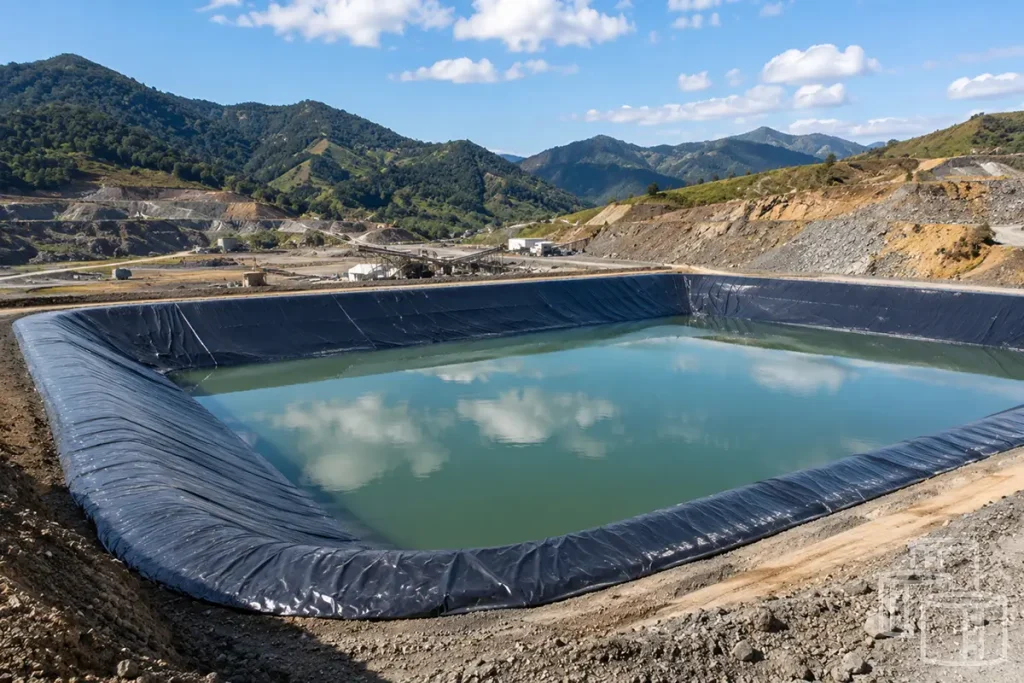
Mining and energy operations often require large engineered water and liquid containment systems. For demanding industrial environments, professionally designed dam and pond liners for mining & energy application provide reliable containment for process water and other operational liquids.
These may hold:
- Process water
- Mine water
- Brine
- Sediment-laden water
- Contact water
- Industrial wastewater
- Evaporation pond liquids
- Other operational liquids
These applications can create greater environmental and operational risks than ordinary water storage. The selected containment liners must therefore match the stored liquid and site conditions. Chemical compatibility is particularly important.
A material suitable for clean water may not suit hydrocarbons, concentrated salts, or aggressive process liquids. Mining liner systems may include several components.
These can include:
- Compacted subgrade
- Geosynthetic clay liners
- HDPE geomembranes
- Protective geotextiles
- Drainage layers
- Secondary containment liners
- Leak detection systems
Composite systems provide more than one barrier against liquid migration. They can be useful where environmental consequences from leakage are significant. Designers must also consider large hydraulic loads and long operating periods.
Settlement can place additional stress on liner seams and penetrations. Temperature changes and direct sunlight can affect exposed geomembranes.
The design should therefore consider the entire containment system, not only the membrane material.
Dam and Pond Liners for Bioretention Basins
Bioretention basins manage and treat stormwater using vegetation, filter media, and drainage layers. They are also commonly called biofilters or rain gardens. Unlike ordinary ponds, these systems may be designed to allow controlled infiltration.
That means a completely impermeable liner is not always required. The correct bioretention liner depends on the design objective. Some systems use permeable geotextile to define and stabilise the basin.
Others require an impermeable barrier.
An impermeable liner may be considered where:
- Groundwater is shallow.
- Surrounding soils are sensitive.
- Nearby soils are contaminated.
- The basin is close to buildings.
- Uncontrolled infiltration could cause problems.
- The design includes a saturated zone.
- Water must remain within the engineered treatment profile.
Common impermeable options include HDPE and geosynthetic clay liners. The liner must also integrate correctly with drainage pipes and outlet structures.
Penetrations require careful sealing to maintain the intended hydraulic behaviour. Bioretention systems should therefore be designed as complete drainage systems.
Simply adding a waterproof membrane does not automatically create effective bioretention. Professionally designed dam and pond liners for bioretention basins can help control water movement while supporting effective stormwater management and treatment.
Common Materials Used for Pond and Dam Liners
There is no single material that works best for every application. Each geomembrane has different properties.
HDPE
High-density polyethylene is widely used for pond liners, dams, reservoirs, and industrial containment. HDPE offers strong resistance to many chemicals and good durability. It can also perform well when exposed to outdoor conditions with appropriate formulation.
Its relative stiffness can make complex shapes more difficult to line. Installation usually involves joining sheets through controlled welding processes.
HDPE is commonly considered for:
- Large dams
- Process water storage
- Mining ponds
- Irrigation storage
- Industrial ponds
LLDPE
Linear low-density polyethylene is more flexible than HDPE. This flexibility can help on irregular surfaces and structures with complex geometry.
LLDPE can accommodate some movement and settlement more easily. However, material selection must still consider UV exposure and chemical compatibility.
PVC
PVC liners are flexible and can conform well to complicated shapes. They are used in some ponds and water containment applications.
Their suitability depends heavily on formulation and exposure conditions. Long-term sunlight exposure and chemical contact should be assessed before selection.
EPDM
EPDM is a flexible synthetic rubber membrane. It is commonly associated with landscape ponds and applications requiring high flexibility.
It can accommodate complex curves and irregular shapes. However, it is not appropriate for every industrial liquid.
Chemical compatibility should always be checked.
Polypropylene
Polypropylene liners can provide flexibility and useful resistance to environmental exposure. Some products are designed specifically for water storage applications.
Their suitability depends on the liner formulation and project conditions.
Geosynthetic Clay Liners
Geosynthetic clay liners contain a bentonite layer between geotextile components. When hydrated, the bentonite creates a low-permeability barrier.
These liners may be used independently or alongside geomembranes. They are common in engineered containment systems where additional protection is required.
Compacted Clay
Natural clay can also create a low-permeability barrier. Its effectiveness depends on material quality, thickness, moisture, and compaction.
Cracking or drying can reduce performance. Suitable clay may also be difficult or expensive to source at some locations.
Who Uses Dam and Pond Liners?
Lined water storage is used across many Australian industries.
Typical users include:
- Farmers and agricultural businesses
- Irrigation operators
- Mining companies
- Energy projects
- Councils
- Civil contractors
- Industrial facilities
- Wastewater operators
- Stormwater managers
- Land developers
- Water infrastructure operators
Each group has different priorities. A farmer may focus primarily on retaining valuable water.
A mining operator may prioritise environmental containment and chemical resistance. A council may need a bioretention system that meets specific stormwater design requirements.
These differences affect liner selection.
How to Choose the Right Liner
Selecting a liner should start with site conditions rather than material preference. Several questions help define the requirements.
What Will the Structure Hold?
Clean irrigation water creates different conditions from industrial wastewater. Identify the expected liquid chemistry before selecting the membrane.
What is the Soil Like?
A geotechnical assessment can identify permeability, stability, rocks, groundwater, and settlement risks. These factors influence both the liner and subgrade design.
Will the Liner be Exposed?
An exposed membrane must tolerate sunlight, temperature changes, weather, and physical activity. Buried liners face different stresses.
How Large is the Storage Area?
Large dams can require extensive field welding and specialised installation equipment. Complex geometry can favour more flexible materials.
Is Chemical Resistance Required?
For mining or industrial applications, compatibility should be verified against the actual stored liquid. Generic chemical resistance is not enough for every project.
What Mechanical Loads are Expected?
Consider vehicles, maintenance equipment, water pressure, sediment, wave action, and possible animal access. Puncture resistance may become particularly important.
What Happens if the Liner Leaks?
The consequences of leakage help determine the required containment level. Higher-risk facilities may need secondary barriers or leak detection systems.
Liner Thickness: Does it Matter?
Thickness is an important specification, but it should not be considered alone. A thicker membrane may offer greater puncture resistance and mechanical strength.
However, performance also depends on:
- Material type
- Manufacturing quality
- Subgrade condition
- Seam quality
- Installation method
- UV exposure
- Chemical exposure
- Operating temperature
A poorly installed thick liner can still fail. Likewise, an inappropriate material cannot be corrected simply by increasing thickness.
The liner specification should reflect the complete operating environment.
Dam and Pond Liner Maintenance
Most geomembrane systems require relatively limited routine maintenance. They still need regular observation.
Maintenance should focus on preventing small issues from becoming larger failures.
Useful activities include:
- Checking exposed liner areas for visible damage
- Removing damaging debris
- Monitoring erosion around edges
- Checking anchor points
- Inspecting inlet and outlet areas
- Controlling vegetation near exposed membranes
- Monitoring unusual water loss
- Checking accessible seams and repairs
- Preventing uncontrolled vehicle access
Avoid dragging sharp equipment across exposed liners. Heavy machinery should only enter lined areas where the system was designed for those loads.
Maintenance requirements may increase after storms, flooding, construction work, or major operational changes.
Liner Inspections
Inspections can occur during installation and throughout the liner’s service life. Construction inspections are especially important. Once a liner becomes covered or filled, some areas become difficult to access.
Installation quality checks may include:
- Visual inspection
- Seam testing
- Weld testing
- Examination of penetrations
- Checking anchoring
- Surface preparation checks
- Leak detection testing where specified
Operational inspections focus on changes that could indicate deterioration. Unexpected water loss is one possible warning sign.
Others include wrinkles, tears, exposed edges, displaced protection layers, or erosion. Inspection frequency should reflect the risk and operating environment.
High-risk containment facilities usually require more structured inspection programs.
How Much do Dam and Pond Liners Cost?
There is no universal cost per dam or pond. The membrane itself is only one part of the project cost.
Important cost factors include:
- Total surface area
- Liner material
- Membrane thickness
- Site accessibility
- Excavation requirements
- Subgrade preparation
- Protective geotextiles
- Number of seams
- Complex shapes
- Inlets and penetrations
- Drainage systems
- Leak detection
- Testing and quality assurance
- Transport to remote sites
An existing leaking dam may require significant preparation before a membrane can be installed. Large mining facilities may require extensive engineering and quality documentation. For this reason, comparing only the membrane price can be misleading.
Whole-of-life cost should also be considered. A cheaper material may cost more if it requires frequent repairs or early replacement.
Australian Requirements and Regulations
Australia does not have one universal rule covering every dam and pond liner. Requirements vary by state, location, storage purpose, environmental risk, and project type. Dam construction itself may require licences or approvals.
For example, some jurisdictions distinguish between exempt dams and dams requiring formal water approvals. Mining and industrial containment can have additional environmental requirements. Authorities may specify how potentially polluting liquids must be contained.
These requirements can influence liner material, installation, testing, and quality assurance. Bioretention requirements can also vary between jurisdictions and local authorities.
Some Australian guidance recommends impermeable liners where uncontrolled infiltration presents specific risks. These can include shallow groundwater, problematic soils, contaminated ground, or nearby structures.
Australian projects may therefore need input from:
- Local councils
- State water authorities
- Environmental regulators
- Geotechnical engineers
- Civil engineers
- Mining regulators
- Stormwater specialists
Requirements should be confirmed for the specific site before construction begins. Local approval conditions can be more specific than general industry guidance.
Can an Existing Dam be Retrofitted with a Liner?
Yes. Some existing dams can be lined to address ongoing seepage. However, installing a membrane should follow an investigation into the cause of the problem.
The dam normally needs to be emptied before major liner work begins. The exposed surface can then be inspected and prepared.
Preparation may involve:
- Removing sediment and debris.
- Repairing unstable areas.
- Removing sharp rocks and roots.
- Reshaping irregular surfaces.
- Compacting suitable subgrade material.
- Installing protective geotextile where required.
- Placing and joining the liner.
- Securing the perimeter.
- Testing seams and critical details.
Existing pipes and structures may require specialised detailing. The condition of the dam embankment must also be considered.
A liner controls seepage but cannot correct every structural problem.
How Long do Pond and Dam Liners Last?
Service life varies significantly. Material type is only one factor.
Longevity also depends on:
- UV exposure
- Temperature
- Water chemistry
- Installation quality
- Mechanical damage
- Liner thickness
- Protective covering
- Stress and movement
- Maintenance practices
Covered liners may experience very different conditions from exposed membranes. Likewise, a clean-water pond differs significantly from a chemical containment facility.
Manufacturers can provide expected performance data for particular products and exposure conditions. These values should be considered alongside actual site conditions.
Final Considerations
Dam and pond liners provide a practical way to control seepage and improve water containment. Their applications range from farm dams to complex industrial storage systems. However, successful lining involves more than selecting a waterproof sheet.
Soil conditions, liquid chemistry, storage geometry, exposure, and environmental risk all influence the design. Farm dam liners often focus on reducing valuable water losses. Mining and energy containment liners may need stronger chemical and environmental protection.
A bioretention liner must support the intended stormwater treatment and infiltration strategy. Material selection is equally important. HDPE, LLDPE, PVC, EPDM, polypropylene, clay, and composite systems each have different characteristics. Installation quality can be just as important as material selection.
Proper subgrade preparation, joining, anchoring, and testing help create a reliable barrier. Regular inspections then help identify damage before it becomes a significant problem. Finally, Australian requirements should always be checked for the specific project and jurisdiction.
The right liner is therefore not simply the thickest or most expensive option. It is the system that matches the water, ground conditions, risks, and intended service life.