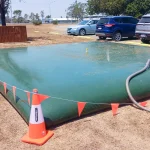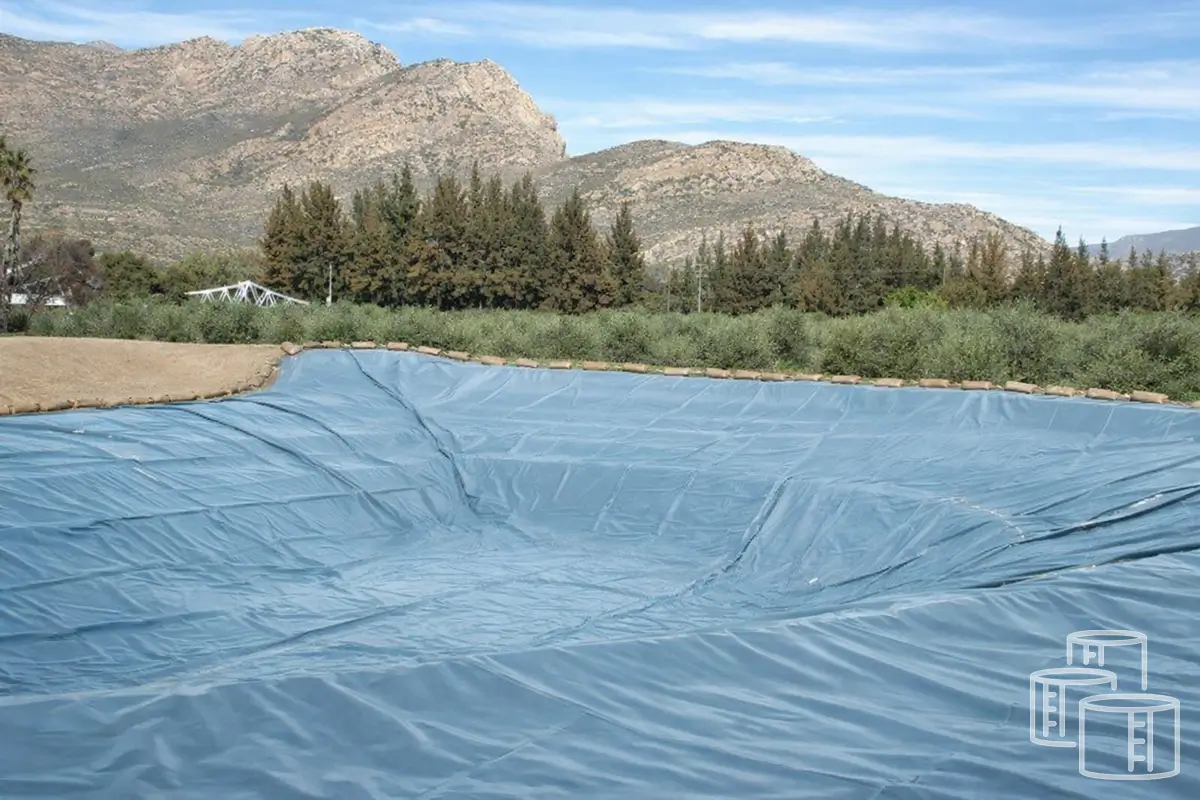
Leaks and spills can create serious environmental, financial, and operational risks. A damaged tank, pipe, valve, or connection may release hazardous liquids without warning. If the liquid reaches soil or groundwater, cleanup can become complex and expensive.
Secondary containment liners help control this risk. They create an impermeable barrier around tanks, equipment, storage areas, and industrial facilities. The liner captures escaped liquid before it spreads beyond the containment zone.
These systems are commonly used for:
- Chemical storage
- Fuel and oil storage
- Fuel and oil storage
- Water treatment plants
- Agricultural facilities
- Manufacturing sites
- Wastewater infrastructure
A secondary containment liner does not replace the primary tank or vessel. Instead, it provides an additional protective layer if the primary system fails.
The right liner must suit the stored liquid, site conditions, temperature, exposure, and expected service life.
This guide explains how secondary containment liners work, where they are used, and which materials are available. It also covers benefits, limitations, installation, maintenance, lifespan, and cost factors.
What is a Secondary Containment Liner?
A secondary containment liner is a flexible or rigid barrier installed beneath or around liquid storage systems. Its purpose is to capture leaks, spills, or overflows from the primary containment system.
The primary containment system may include:
- Storage tanks
- Drums
- Process vessels
- Pipelines
- Pumps
- Chemical handling equipment
The liner creates a sealed containment area around these assets.
This area may be called a:
- Bund
- Berm
- Dike
- Containment pit
- Spill containment zone
If liquid escapes from the primary system, the liner prevents it from entering the surrounding soil. The spill remains inside the protected area until it can be removed or treated safely.
Learn more about our tank liners and the different liner solutions available for industrial, commercial, and water storage applications.
Primary vs Secondary Containment
Primary containment is the first barrier holding the liquid. Examples include a tank wall, pipe, drum, or process vessel.
Secondary containment is the backup system. It becomes important when the primary barrier leaks, cracks, overflows, or fails.
A simple example looks like this:
- A chemical tank develops a leak.
- Liquid escapes from the tank.
- The spill enters the surrounding bund.
- The liner prevents ground infiltration.
- The liquid remains inside the containment area.
- Site personnel remove or recover the spill.
Without a liner, the liquid may pass through concrete cracks, joints, soil, or porous surfaces. This can lead to environmental contamination and expensive remediation work.
How Secondary Containment Liners Work
Secondary containment liners work by creating a continuous, liquid-resistant barrier. The liner is installed across the floor and walls of the containment area.
Seams, penetrations, corners, and connections must be properly sealed.
The finished system should prevent liquids from escaping through:
- Soil
- Concrete cracks
- Drainage points
- Wall joints
- Pipe penetrations
- Construction gaps
When a leak occurs, the liner directs the liquid into the containment area.
The spill can then be:
- Pumped out
- Collected
- Treated
- Recovered
- Disposed of safely
Some systems also include drainage, sumps, alarms, or leak detection equipment. These additions can help operators identify and manage spills more quickly.
Why Secondary Containment Matters
Secondary containment reduces the consequences of equipment failure. Even a small leak can become serious if it continues unnoticed.
Liquids may spread through soil, enter drainage systems, or reach groundwater.
A properly designed liner helps limit these risks.
Environmental protection
Many industrial liquids can damage soil, groundwater, and nearby ecosystems. Secondary containment prevents uncontrolled migration beyond the storage area.
This is especially important for:
- Fuels
- Oils
- Acids
- Alkalis
- Solvents
- Process chemicals
Reduced cleanup costs
Environmental remediation can be expensive. Contaminated soil may need excavation, transport, treatment, or disposal.
Groundwater contamination can require long-term monitoring and recovery. A liner keeps the spill inside a smaller, controlled area.
This often makes cleanup faster and less disruptive.
Lower operational risk
A major spill may stop production or restrict access to part of a site. Containment systems help reduce the area affected by an incident.
This may support faster recovery and shorter operational downtime.
Protection of infrastructure
Some chemicals can damage concrete, foundations, coatings, and underground services. A compatible liner separates the stored liquid from vulnerable surfaces.
This helps protect the containment structure itself.
Better site management
A contained spill is easier to inspect, measure, and remove.
Operators can manage the incident without allowing the liquid to spread across the site.
This improves emergency response and overall risk control.
Who Uses Secondary Containment Liners?
Secondary containment liners are used across many commercial and industrial sectors. They are especially valuable where liquids could harm people, property, or the environment.
Common users include:
- Chemical manufacturers
- Fuel storage operators
- Mining companies
- Agricultural businesses
- Water treatment facilities
- Wastewater plants
- Food processing facilities
- Manufacturing sites
- Logistics centres
- Utility operators
- Tank farms
- Industrial contractors
Facility managers, engineers, environmental consultants, and safety teams may all participate in liner selection. The final decision should reflect both technical and operational requirements.
Common Applications
Secondary containment liners can be adapted to many storage and process environments.
Chemical storage areas
Chemical tanks often require a sealed containment zone. The liner must resist the specific chemicals stored on site.
Compatibility is more important than general material strength. A liner suitable for water may fail when exposed to solvents or concentrated acids.
Fuel and oil storage
Fuel, diesel, lubricants, and hydraulic oils can contaminate soil and groundwater. Containment liners are often installed beneath tanks, drums, pumps, and transfer areas.
They may also be used around generators and fuel distribution equipment.
Mining operations
Mining sites use containment liners around:
- Process tanks
- Chemical storage areas
- Fuel facilities
- Fuel facilities
- Water treatment equipment
These environments may involve heavy traffic, harsh weather, and aggressive chemicals. The liner must provide strong puncture and chemical resistance.
Agricultural facilities
Farms and agricultural businesses may store fertilisers, fuels, wastewater, and liquid chemicals. A containment liner helps prevent spills from entering surrounding land or drainage systems.
Flexible liners are often useful where large containment areas are required.
Water treatment plants
Treatment facilities handle chemicals such as disinfectants, coagulants, acids, and alkalis. Secondary containment protects floors, structures, and nearby drainage systems.
It may be installed around dosing equipment, tanks, and chemical rooms.
Manufacturing facilities
Manufacturing sites often store raw materials, process chemicals, oils, and cleaning agents. Containment liners can protect production areas and reduce the impact of accidental releases.
Wastewater facilities
Wastewater systems may contain contaminated liquids, sludge, or treatment chemicals. Liners help isolate these materials from the surrounding ground.
They are also used in pits, lagoons, channels, and temporary storage areas.
Tank farms and bulk storage sites
Large storage facilities may contain multiple tanks within one bunded area. The liner creates a continuous barrier beneath the entire site.
This helps contain leaks from tanks, valves, pipes, or transfer points.
Types of Secondary Containment Liner Materials
Not all secondary containment liners perform the same. Each material offers different levels of chemical resistance, flexibility, UV stability, and durability.
Selecting the right liner depends on the stored liquid and the operating environment.
HDPE Liners
High-Density Polyethylene (HDPE) is one of the most widely used liner materials. It offers excellent chemical resistance and long-term durability.
HDPE liners are commonly specified for:
- Chemical storage
- Mining operations
- Landfills
- Wastewater facilities
- Fuel containment
- Industrial process areas
Advantages
- Excellent chemical resistance
- Strong puncture resistance
- Long service life
- High UV resistance
- Suitable for large containment areas
Limitations
- Lower flexibility than some other materials
- Requires professional welding during installation
- Less suitable for highly irregular surfaces
LLDPE Liners
Linear Low-Density Polyethylene (LLDPE) provides many of the same benefits as HDPE while offering greater flexibility. It conforms more easily to uneven ground and complex containment areas.
LLDPE is often selected for:
- Temporary containment
- Agricultural applications
- Irregular site layouts
- Flexible containment systems
Advantages
- Excellent flexibility
- Good chemical resistance
- High impact resistance
- Easier to install on uneven surfaces
Limitations
- Slightly lower stiffness than HDPE
- May offer reduced puncture resistance in heavy-duty applications
PVC Liners
Polyvinyl Chloride (PVC) liners are lightweight and highly flexible. They are commonly used where installation speed and flexibility are important.
Typical applications include:
- Water containment
- Decorative ponds
- Temporary containment
- Light industrial projects
Advantages
- Very flexible
- Easy to fabricate
- Cost-effective
- Simple installation
Limitations
- Lower resistance to some chemicals
- Shorter service life in demanding environments
- May degrade faster under prolonged UV exposure
For applications where flexibility, cost-effectiveness, and ease of installation are priorities, our PVC tank liners provide a reliable solution for protecting water storage tanks, ponds, and other containment systems.
EPDM Liners
EPDM is a synthetic rubber membrane known for its flexibility. It performs well where movement or temperature changes are expected.
Common applications include:
- Water reservoirs
- Irrigation systems
- Stormwater ponds
- Environmental containment
Advantages
- Excellent flexibility
- Good weather resistance
- Performs well in cold climates
- Long-term elasticity
Limitations
- Not suitable for every chemical
- Lower puncture resistance than HDPE
- Higher material cost for some applications
Polypropylene (PP) Liners
Polypropylene liners combine flexibility with strong chemical resistance. They are often used in industrial environments where elevated temperatures are present.
Typical applications include:
- Chemical processing
- Industrial containment
- Process water systems
Advantages
- Excellent chemical compatibility
- Good flexibility
- High temperature resistance
- Long service life
Limitations
- Higher initial cost
- Material selection should always consider chemical compatibility
Material Comparison
The table below provides a general comparison of the most common liner materials.
| Material | Chemical Resistance | UV Resistance | Flexibility | Puncture Resistance | Typical Applications |
|---|---|---|---|---|---|
| HDPE | Excellent | Excellent | Moderate | Excellent | Chemical storage, mining, fuel containment, wastewater facilities |
| LLDPE | Excellent | Very Good | Excellent | Very Good | Flexible containment systems, agriculture, irregular site layouts |
| PVC | Moderate | Moderate | Excellent | Moderate | Water storage, temporary containment, light industrial applications |
| EPDM | Good | Excellent | Excellent | Good | Reservoirs, ponds, stormwater management, environmental containment |
| Polypropylene (PP) | Excellent | Very Good | Good | Good | Chemical processing, industrial containment, high-temperature applications |
There is no single material that suits every project. The most appropriate liner depends on the liquid being stored, site conditions, environmental exposure, installation method, and expected service life.
Benefits of Secondary Containment Liners
A well-designed containment liner provides more than spill protection. It helps reduce operational risks while supporting long-term asset management.
Key benefits include:
- Helps prevent soil contamination
- Reduces the risk of groundwater pollution
- Supports safer chemical storage
- Minimises spill cleanup costs
- Protects surrounding infrastructure
- Improves long-term environmental performance
- Suitable for a wide range of industries
- Available in materials for different chemical environments
- Can provide decades of service with proper installation and maintenance
For many industrial facilities, secondary containment forms an important part of an overall risk management strategy.
Potential Limitations
Although containment liners provide significant benefits, they are not maintenance-free. Like any engineered system, they perform best when correctly designed, installed, and maintained.
Potential limitations include:
- Incorrect material selection can reduce chemical resistance.
- Poor installation may result in seam failures.
- Sharp objects can puncture some liner materials.
- Ground preparation directly affects liner performance.
- Periodic inspections remain necessary throughout the liner’s service life.
These limitations can usually be minimised through proper engineering, quality installation, and routine inspections. Rather than viewing them as disadvantages, they should be considered during project planning.
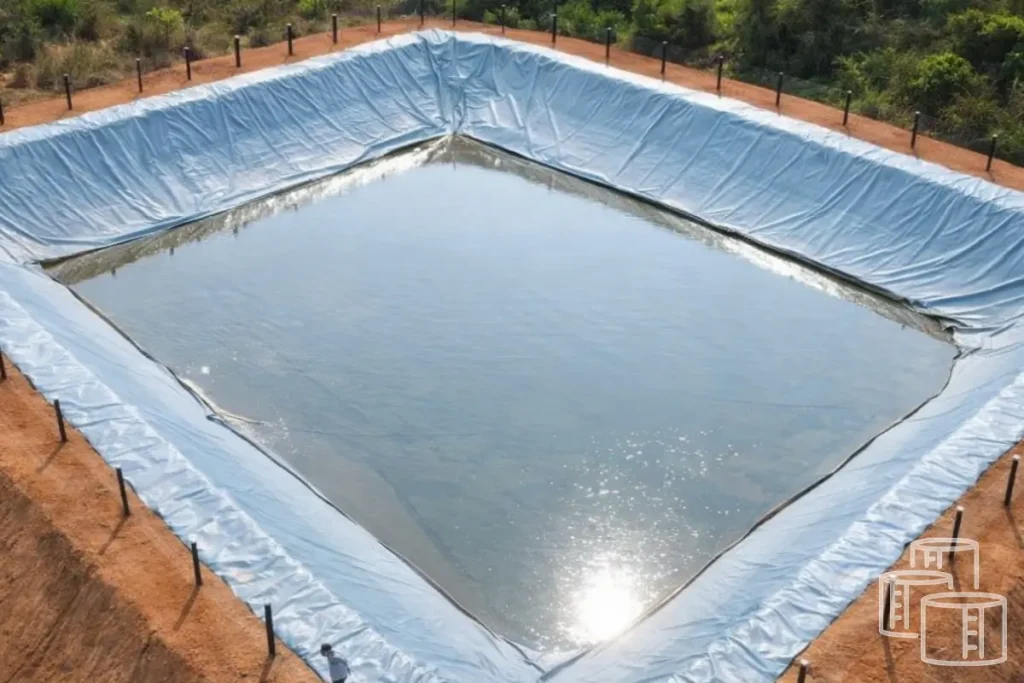
How to Choose the Right Secondary Containment Liner
Choosing the right secondary containment liner involves more than selecting the strongest or most affordable material. The liner must perform reliably throughout its service life while remaining compatible with the stored liquid and site conditions.
Several factors should be evaluated before making a final decision.
1. Type of Stored Liquid
The first consideration is the liquid the containment system will protect against. Different chemicals react differently with liner materials. A liner that performs well with water may deteriorate quickly when exposed to hydrocarbons, solvents, or highly concentrated acids.
Typical stored liquids include:
- Fuels and diesel
- Petroleum products
- Acids and alkalis
- Industrial chemicals
- Wastewater
- Process water
- Fertilisers
- Fire water
Always verify chemical compatibility before selecting a liner material.
2. Chemical Compatibility
Chemical resistance is often the most important selection criterion. The liner should maintain its physical properties throughout continuous or accidental exposure to the stored substance. Swelling, cracking, softening, or embrittlement may indicate incompatibility and can significantly reduce the system’s effectiveness.
Manufacturers typically provide chemical compatibility charts to help engineers determine whether a material is suitable for a particular application.
3. Environmental Conditions
External conditions can have a significant impact on liner performance.
Consider factors such as:
- UV exposure
- Rainfall
- Wind
- Temperature fluctuations
- Freeze-thaw cycles
- Exposure to standing water
Outdoor installations generally require materials with strong UV and weather resistance to maintain long-term performance.
4. Mechanical Loads
The liner may also be exposed to physical stress during operation.
Potential sources of mechanical loading include:
- Vehicle traffic
- Maintenance equipment
- Heavy storage tanks
- Sharp rocks beneath the liner
- Settlement of the subgrade
In these situations, thicker liners or protective geotextile layers may be required to reduce the risk of punctures and abrasion.
5. Site Conditions
Every installation site presents unique challenges.
Important considerations include:
- Ground stability
- Soil type
- Surface smoothness
- Drainage
- Available installation space
Proper site preparation helps improve liner performance and reduces the likelihood of future damage.
6. Expected Service Life
Some facilities require containment systems that will remain in service for decades, while others only need temporary containment during construction or maintenance activities.
Understanding the project’s expected lifespan helps determine the most suitable material and liner thickness.
7. Budget and Lifecycle Cost
The lowest purchase price does not always represent the lowest overall cost.
When comparing liner options, consider:
- Material costs
- Installation costs
- Maintenance requirements
- Repair frequency
- Expected service life
- Replacement costs
A higher-quality liner may provide better long-term value by reducing maintenance and extending operational life.
Every facility has different containment requirements. Our secondary containment liners are designed for a wide range of industrial applications, helping businesses select the right material based on chemical compatibility, site conditions, and long-term performance.
Installation Considerations
Proper installation is just as important as selecting the right material. Even a high-quality liner may fail if it is installed incorrectly.
Most industrial containment systems follow a structured installation process.
Site Preparation
The installation area should be cleared of rocks, debris, roots, and sharp objects that could damage the liner. The subgrade should be stable, smooth, and properly compacted.
Liner Placement
Large liner panels are carefully positioned across the containment area. Care is taken to minimise wrinkles while allowing for thermal expansion and contraction.
Seaming
Individual panels are joined using specialised welding techniques. Properly welded seams are essential for maintaining a continuous impermeable barrier.
Depending on the material, seam quality may be verified through non-destructive testing methods before the system is commissioned.
Anchoring
The liner must be securely fixed around the perimeter. Anchor trenches or mechanical fastening systems help prevent movement caused by wind, thermal expansion, or changing water levels.
Final Inspection
Before the containment area enters service, the completed installation should be visually inspected for:
- Surface damage
- Seam quality
- Penetrations
- Wrinkles
- Proper anchoring
- Drainage performance
A thorough inspection helps identify any issues before the system is exposed to stored liquids.
Maintenance and Inspection
Although secondary containment liners are designed for long-term performance, routine inspections remain essential. Preventive maintenance allows operators to identify minor issues before they develop into more significant problems.
Routine inspections typically include:
- Visual examination of the liner surface
- Inspection of welded seams
- Checking for punctures or tears
- Removal of debris
- Verification that drainage systems remain clear
- Inspection of anchor points and edge restraints
Facilities that store aggressive chemicals or operate in demanding environments may require more frequent inspections. Any damage should be repaired promptly using approved repair procedures that are compatible with the original liner material.
Maintaining accurate inspection records also helps support asset management and regulatory compliance.
Lifespan and Long-Term Performance
The service life of a secondary containment liner depends on several interacting factors.
These include:
- Material type
- Liner thickness
- Chemical exposure
- UV exposure
- Installation quality
- Site conditions
- Maintenance practices
Under suitable operating conditions, many industrial liner systems can remain in service for several decades. However, no liner lasts indefinitely.
Periodic inspections help determine when repairs, rehabilitation, or replacement should be considered. Rather than focusing solely on the manufacturer’s expected lifespan, facility managers should evaluate the liner’s actual condition throughout its operational life.
Cost Factors
The cost of a secondary containment liner system depends on far more than the price of the liner itself. Project-specific conditions often have a greater influence on the overall investment.
Common cost factors include:
| Cost Factor | Impact on Project Cost |
|---|---|
| Liner material | Higher-performance materials generally cost more. |
| Liner thickness | Thicker liners require more material and may increase installation costs. |
| Project size | Larger containment areas require additional material and labour. |
| Site preparation | Excavation, grading, and ground improvement can significantly affect costs. |
| Installation complexity | Irregular layouts and multiple penetrations increase labour requirements. |
| Welding and testing | Quality assurance and seam testing add to installation costs. |
| Protective layers | Geotextiles or protective covers may be required in demanding environments. |
| Future maintenance | Higher-quality systems often reduce long-term maintenance costs. |
When evaluating different options, many organisations consider the total lifecycle cost rather than the initial purchase price alone.
A well-designed containment system may require a larger upfront investment but deliver lower maintenance costs, fewer repairs, and a longer service life, making it the more economical solution over time.
Conclusion
Secondary containment liners play an essential role in protecting industrial facilities from the consequences of leaks and spills. By creating an impermeable barrier beneath or around storage systems, they help prevent environmental contamination, protect infrastructure, and reduce the cost and complexity of spill response.
However, selecting the right liner involves more than choosing a material. Chemical compatibility, environmental conditions, mechanical loads, installation quality, and long-term maintenance all influence how well a containment system performs over time.
Whether the application involves chemical storage, fuel facilities, wastewater treatment, mining, or manufacturing, investing in a properly designed secondary containment system can improve operational resilience while supporting environmental protection and responsible risk management.
With the right material, professional installation, and regular inspections, secondary containment liners can provide reliable performance for many years, helping facilities manage spills safely and efficiently.