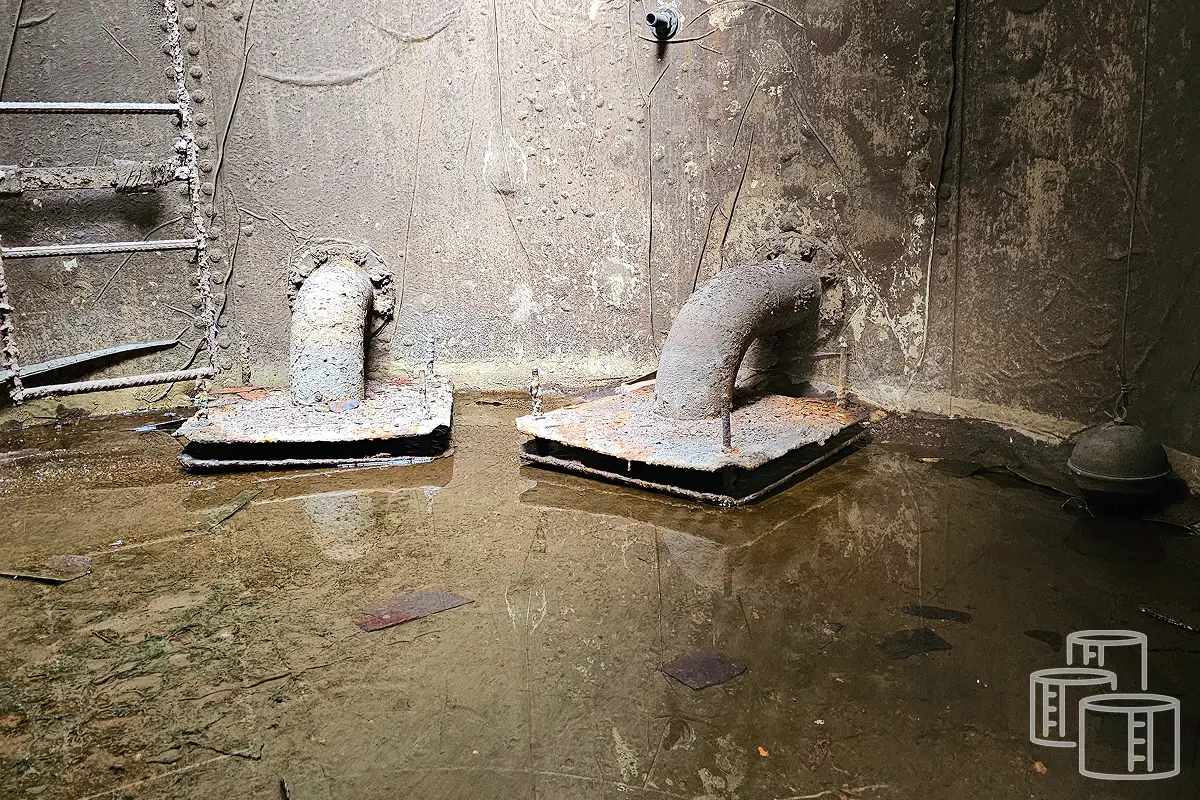
Sediment can gradually accumulate at the bottom of almost any water storage tank. Small amounts may initially go unnoticed. However, deposits can become more significant as particles continue settling over time.
Sediment can include dirt, minerals, organic matter, corrosion products and other suspended solids. These materials may affect water quality, tank condition and ongoing maintenance requirements.
Understanding sediment buildup helps tank owners decide when inspection, sediment removal or complete tank cleaning may be necessary.
This guide explains how sediment develops, how it can be detected and how ongoing buildup can be reduced.
What is Sediment in a Water Storage Tank?
Tank sediment is material that settles from stored water and accumulates on internal surfaces. Most sediment eventually collects on the tank floor because gravity causes suspended particles to settle.
The exact composition depends on the water source, tank material, surrounding environment and operating conditions.
Common components may include:
- Sand and fine soil particles
- Dust and airborne debris
- Mineral deposits
- Organic material
- Rust and corrosion products
- Fine suspended solids
- Material entering through tank openings or water supplies
Sediment does not necessarily indicate a serious tank problem. However, increasing deposits can provide important information about water quality and tank condition.
A significant sediment layer may also indicate that inspection or maintenance is required.
What Causes Sediment Buildup in Water Tanks?
Sediment usually develops gradually rather than appearing from one contamination event. Water entering a storage tank may already contain small suspended particles. These particles can remain suspended while water moves through the system.
When water movement slows inside the tank, heavier particles begin settling. Over time, repeated filling and storage can create visible deposits on the tank floor. External contaminants may also enter tanks through vents, openings or damaged components.
The surrounding environment can therefore influence the amount and type of tank debris. Internal tank deterioration may contribute additional material. For example, corrosion can create particles that eventually settle with other deposits.
Water source is another important factor. Rainwater, bore water, treated water and process water can introduce different types of suspended material.
Tank design and operation also influence sediment distribution. Areas with limited water movement may experience greater accumulation than areas near active inlets.
Sediment, Sludge and Tank Debris: what is the Difference?
These terms are related, but they do not always describe exactly the same material.
Sediment generally describes solid particles that settle from water and collect at the bottom.
Tank debris is a broader term for unwanted material entering or developing inside a storage tank. Debris may include leaves, insects, larger particles or fragments from deteriorating components.
Sludge usually describes a thicker deposit containing accumulated solids, organic material and water. Older sediment deposits can sometimes develop into a denser sludge layer.
The distinction matters when assessing tank condition. A small amount of loose sediment may require different management from extensive sludge accumulation.
The type and quantity of material should therefore be considered before deciding on cleaning requirements.
How to Detect Sediment in a Water Storage Tank
Sediment is not always visible during normal tank operation. Deposits can remain underwater and out of sight for long periods. For this reason, water appearance alone cannot provide a complete picture of internal tank condition.
However, several signs can indicate possible sediment accumulation.
These include:
- Visible deposits on accessible tank surfaces
- Particles appearing in discharged water
- Cloudy or discoloured water
- Debris around outlets
- Changes in water quality
- Sludge visible on the tank floor
- Unexpected material found during inspection
Some sediment may also become disturbed during changes in water flow. Previously settled material can then become suspended in the stored water.
This can make the problem more noticeable. However, significant deposits can also exist without obvious changes to the water.
Inspection provides a more reliable way to understand what is happening inside the tank.
The Role of Tank Inspections in Detecting Sediment
Routine tank inspection is an important part of water storage tank maintenance. An inspection can identify sediment before deposits become difficult to manage. It can also help determine whether cleaning is actually necessary.
Different inspection methods may be appropriate for different tanks. Accessible tanks may allow certain internal areas to be visually assessed. Other tanks require specialised methods to inspect submerged surfaces.
ROV inspections can be particularly useful for examining tank interiors. A remotely operated vehicle can capture visual information from inside a water-filled tank.
This approach can help identify:
- Sediment on the tank floor
- Distribution of accumulated deposits
- Localised debris
- Sludge accumulation
- Internal surface condition
- Areas requiring closer assessment
ROV inspection can provide useful evidence before cleaning decisions are made. It may also reduce the need for personnel to enter the tank during the assessment stage. Importantly, inspection and cleaning are not the same activity.
An inspection determines tank condition. Cleaning addresses contamination, sediment or other deposits when removal is required.
This distinction can prevent unnecessary cleaning while ensuring developing problems are not overlooked.
Why Should Sediment be Removed From Water Storage Tanks?
A thin sediment layer may not immediately affect tank operation. However, allowing deposits to accumulate indefinitely can create maintenance and water quality concerns. One concern is the environment created by accumulated organic material and sludge.
These deposits can provide conditions that support unwanted microbiological activity. Sediment can also trap contaminants rather than allowing them to leave through normal water turnover. Another consideration is corrosion.
Deposits can conceal internal surfaces and make changes in tank condition harder to identify. Some deposit conditions may also contribute to localised deterioration. Heavy accumulation can affect tank components.
Sediment may collect near outlets, drains or other low-level equipment. In severe cases, this material can interfere with normal operation.
There is also a practical maintenance issue. A small deposit is generally easier to address than years of accumulated sludge and debris. Regular assessment allows tank owners to respond before the problem becomes extensive.
When does Sediment Buildup Mean a Tank Needs Cleaning?
There is no single sediment depth that automatically means every water tank requires cleaning. The decision should consider tank condition, water use and inspection findings.
Cleaning may become appropriate when:
- Sediment accumulation is significant
- Sludge has developed on the tank floor
- Debris is present throughout the tank
- Water quality has noticeably changed
- Sediment is affecting outlets or equipment
- Inspection identifies substantial deposits
- Internal surfaces require broader cleaning
- Contamination is suspected
- Maintenance requirements specify cleaning
The intended use of the stored water is also important. Requirements for potable water can differ from those for fire, industrial or process water systems. This is why condition-based assessment is useful.
The presence of some sediment does not automatically establish the required cleaning method. Inspection helps determine the extent of the problem before work begins.
How Is Sediment Removed from a Water Storage Tank?
Sediment removal for water storage tanks involves removing settled material from internal surfaces. The exact procedure depends on tank design, sediment quantity and operational requirements.
A typical process begins with an assessment of tank condition. This establishes where sediment has accumulated and how extensive the deposits are.
The appropriate removal method can then be selected. Depending on the tank, sediment may be removed using specialised suction or cleaning equipment.
Loose deposits, heavier sludge and larger debris may require different approaches.
The process generally considers:
- Tank condition and access requirements
- Type and distribution of sediment
- Operational requirements
- Appropriate sediment removal methods
- Handling of removed material
- Final inspection of cleaned areas
Additional cleaning may be required when deposits extend beyond loose sediment. This can include cleaning internal surfaces affected by sludge or other contamination.
Disinfection or sterilisation may also be required in specific circumstances. However, these processes serve different purposes and should not be treated as interchangeable.
Sediment Removal vs Complete Water Tank Cleaning
Sediment removal and water tank cleaning are closely related. However, they are not necessarily identical processes. Sediment removal specifically targets material deposited within the tank.
The primary focus is usually accumulated solids, debris and sludge on the tank floor. Complete water tank cleaning has a broader purpose. It may include sediment removal alongside cleaning of walls, floors and other internal components.
The required scope depends on tank condition. For example, a tank may contain loose sediment while its remaining internal surfaces are relatively clean. Another tank may have sediment, biological growth and contamination across multiple surfaces.
These tanks may require very different maintenance approaches. An inspection can help determine whether targeted sediment removal is sufficient. It can also identify situations requiring broader tank cleaning.
This distinction is important when planning efficient water storage tank maintenance.
Can Sediment be Removed Without Completely Draining a Tank?
In some situations, sediment can be removed without completely draining the water storage tank. Whether this approach is suitable depends on several factors.
These include:
- Tank configuration
- Water use
- Sediment type
- Deposit thickness
- Access conditions
- Water quality requirements
- Available cleaning equipment
- Condition of internal surfaces
Removing sediment underwater may help reduce water loss and operational disruption in suitable applications. However, it is not appropriate for every tank. Extensive sludge or widespread contamination may require a more comprehensive cleaning process.
The tank should therefore be assessed before selecting a cleaning method. The objective is not simply to remove visible material.
The selected process should address the actual condition and operational requirements of the tank.
How to Reduce Sediment Buildup in Water Storage Tanks
Completely preventing sediment may not always be practical. Many water sources naturally contain small quantities of suspended material.
However, good tank management can reduce excessive accumulation.
Control Contaminants Entering the Tank
Reducing external debris is one of the simplest preventative measures. Tank openings, vents and other components should remain appropriately protected and maintained.
Damaged components should be addressed before they allow additional contamination to enter.
Consider Incoming Water Quality
The amount of sediment entering a tank depends partly on the water source. Where appropriate, filtration or other upstream controls may reduce suspended material.
These measures should suit the specific water system and its intended use.
Monitor Tank Condition
Sediment becomes harder to manage when nobody knows how quickly it is accumulating. Periodic inspections create a record of changing tank conditions.
Comparing inspection findings can reveal whether deposits are stable or increasing.
Address Corrosion and Deterioration
Not all sediment comes from outside the tank. Corrosion products and deteriorating components can contribute to internal deposits.
Finding the source can therefore be as important as removing the sediment itself.
Remove Excessive Deposits
Allowing sludge and sediment to accumulate indefinitely can make future maintenance more difficult. Removal should be considered when inspection findings show that deposits require attention.
Preventative maintenance is generally more manageable than responding after serious accumulation develops.
How Often Should Water Storage Tanks be Inspected and Cleaned?
Inspection and cleaning should not automatically follow the same schedule. A tank can be inspected without requiring cleaning every time. Inspection provides information about current conditions.
Cleaning is a maintenance response when those conditions justify intervention.
The appropriate frequency depends on factors including:
- Tank purpose
- Water source
- Water quality requirements
- Environmental conditions
- Previous sediment levels
- Tank construction
- Operational requirements
- Applicable maintenance standards
A tank receiving water with more suspended solids may develop sediment faster. Another tank may remain relatively clean for a much longer period.
Previous inspection records are particularly useful. They can show how quickly sediment accumulates within a specific tank. This information supports more informed maintenance planning.
Rather than cleaning solely because a fixed period has passed, tank condition should form part of the decision. Applicable standards, regulations and site-specific maintenance requirements must also be considered.
Why ROV Inspection Can Support Cleaning Decisions
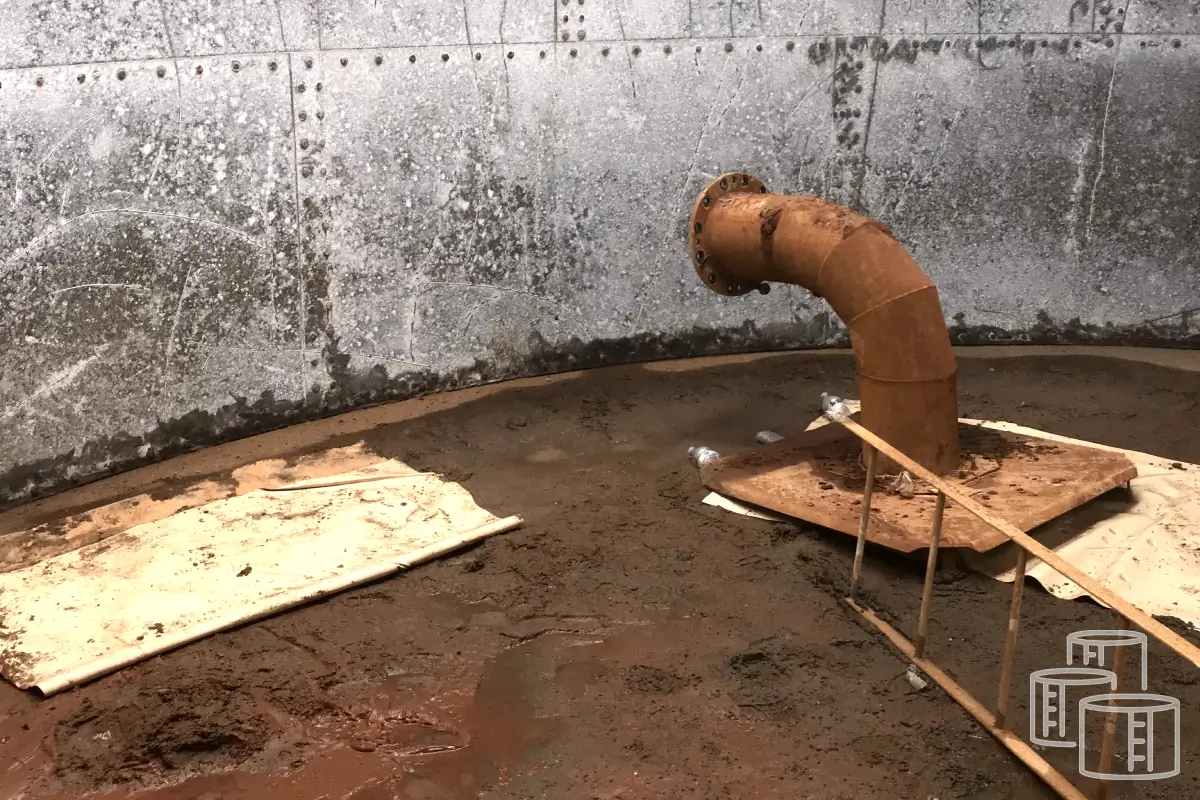
Determining whether a tank needs cleaning can be difficult without seeing its internal condition. ROV technology provides another option for collecting this information. The vehicle can inspect submerged areas and record visual evidence of deposits.
This can help maintenance teams understand sediment distribution before selecting a removal method. ROV footage can also provide a useful reference for future inspections. Changes in sediment levels can then be compared over time.
This supports condition-based maintenance rather than relying entirely on assumptions about tank cleanliness. An ROV inspection does not remove sediment. Instead, it provides information that can support the decision to clean, monitor or investigate further.
That distinction keeps inspection and cleaning activities clearly defined.
What Happens if Tank Sediment is Left for too Long?
Sediment does not disappear while a tank remains in service. Additional particles can continue settling onto existing deposits. Over time, loose sediment may become deeper or develop into heavier sludge.
Organic material may also become incorporated into these deposits. This can make later removal more complicated.
Accumulated material can also conceal parts of the tank floor. That may make visual assessment of underlying surfaces more difficult. Problems near outlets and other low-level components may also become more likely as deposits increase.
For these reasons, sediment should be monitored as part of ongoing tank maintenance. The objective is not necessarily to maintain a completely sediment-free tank at all times.
Instead, maintenance should prevent accumulation from reaching unacceptable levels.
Sediment Management as Part of Water Storage Tank Maintenance
Sediment is one of several factors that influence the condition of a water storage tank. Effective management starts with understanding how quickly deposits are developing. Regular inspection can provide that information.
ROV inspection may provide additional visibility where direct internal assessment is difficult. When deposits become excessive, targeted sediment removal may be appropriate.
Broader water tank cleaning may be required when contamination extends beyond settled material. Preventative measures can then help reduce future accumulation.
This creates a simple maintenance cycle:
Inspect → assess → remove when necessary → investigate causes → monitor future buildup.
This approach connects cleaning decisions to actual tank condition. It can also help identify developing problems before sediment becomes extensive.
Sediment removal should therefore be viewed as part of broader water storage tank maintenance. Regular assessment, appropriate cleaning and preventative management work together to protect long-term tank condition.