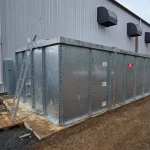
Water containment systems are often designed to perform reliably for many years, yet failures still occur in installations that initially appear well planned. In most cases, water containment failure is not the result of a single defect or sudden breakdown. Instead, it develops gradually as multiple factors interact over time, often without obvious warning signs.
Understanding why containment systems fail requires looking beyond isolated components and considering how environmental, structural, and operational conditions evolve throughout the system’s lifespan.
Gradual Material Degradation
All containment systems are subject to long-term material changes. Continuous exposure to moisture, temperature fluctuations, and operational stresses can slowly alter material properties. These changes rarely appear as immediate damage. Instead, degradation accumulates incrementally, reducing resilience and tolerance to movement or load.
Because this process is slow, systems may continue to function within acceptable limits for years before performance begins to decline. By the time visible signs appear, underlying deterioration may already be advanced.
Ground Movement and Subsurface Changes
One of the most overlooked contributors to water containment failure occurs below the surface. Soil conditions are not static. Settlement, compaction, erosion, and moisture variation can all affect how a containment system behaves over time.
Even minor ground movement can introduce stress at interfaces and boundaries. These stresses may not cause immediate leaks but can gradually weaken connections and structural continuity. In many cases, failures originate beneath the containment area, making early detection difficult.
Inadequate Allowance for Environmental Exposure
Environmental exposure plays a significant role in long-term containment performance. UV radiation, temperature cycling, rainfall patterns, and drainage conditions all influence how systems age.
Design assumptions often rely on average conditions, but real environments rarely behave consistently. Prolonged heat exposure, unexpected water pooling, or seasonal extremes can accelerate wear and alter how materials respond to stress. When environmental factors are underestimated, degradation progresses faster than anticipated.
Design Assumptions That No Longer Match Reality
Containment systems are typically designed for specific operating conditions. Over time, however, usage patterns may change. Increased storage volumes, higher turnover rates, or exposure to different substances can push systems beyond their original design assumptions.
When systems are used in ways that differ from initial expectations, performance margins shrink. What once operated comfortably within limits may gradually approach failure thresholds without triggering immediate alarms.
Limited Visibility and Delayed Detection
Unlike mechanical systems with moving parts, containment systems often fail quietly. Many internal changes occur out of sight, making early warning signs subtle or nonexistent.
Small leaks, interface separation, or gradual deformation may go unnoticed until performance is compromised. Limited visibility inside or beneath containment structures contributes to delayed detection, allowing issues to progress unchecked over extended periods.
How Containment Components Interact as a System
A containment system functions as an integrated whole rather than a collection of independent elements. Bases, boundaries, joints, penetrations, and interfaces all work together to maintain integrity. Failure frequently occurs at transition points where components meet, rather than within a single primary element.
In some systems, liners are part of this broader containment assembly, interacting with structural and environmental factors rather than acting as standalone solutions. In many applications, internal containment components are incorporated as part of the overall containment strategy to help manage interfaces and internal boundaries. When these interactions are not fully accounted for, stress concentrations and weak points can develop over time.

Conclusion
Water containment failure is rarely caused by a single flaw or sudden event. It is typically the result of cumulative effects that develop slowly as materials age, ground conditions shift, environments change, and operational demands evolve.
By understanding containment systems as dynamic, long-term assets rather than static installations, it becomes easier to recognize why failures occur and why they often remain unnoticed until later stages. A system-level perspective provides valuable insight into the mechanisms that influence containment performance over time.