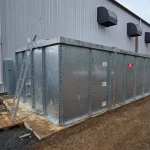
Water storage systems are often designed to withstand demanding operating conditions. However, long-term performance is influenced not only by design and materials but also by the continuous stresses experienced during everyday operation. Operational stress on water storage systems develops gradually, accumulating over time rather than causing immediate or obvious damage.
Understanding Operational Stress in Water Storage Environments
Operational stress refers to the repeated physical, thermal, and hydraulic forces acting on a storage system throughout its service life. Unlike sudden failures or external damage, these stresses are part of normal operation. Because they develop incrementally, their impact is often underestimated or overlooked.
Over years of use, even well-designed systems experience subtle structural and material responses to changing conditions. These responses may not trigger immediate issues but can influence long-term stability and performance.
Filling and Emptying Cycles as a Stress factor
One of the most common sources of operational stress on water storage systems is the regular cycle of filling and emptying. Each cycle introduces changes in internal pressure, wall loading, and base support conditions. When repeated over thousands of cycles, these variations can lead to gradual fatigue in joints, panels, and structural connections.
Systems operating with irregular or high-frequency cycles may experience greater cumulative stress compared to those with stable water levels. The effects are typically progressive rather than sudden, making them difficult to detect without long-term performance awareness.
Temperature Fluctuations and Material Response
Temperature variation is another contributor to operational stress. Daily and seasonal temperature changes cause materials to expand and contract. While these movements are usually within acceptable limits, repeated thermal cycling can influence seals, coatings, and interfaces over time.
In outdoor installations, temperature exposure often interacts with other stress factors, such as water level changes or environmental exposure. The combined effect may gradually alter material behavior, particularly in components designed to accommodate movement.
Hydraulic Pressure Variation and Internal Forces
Water storage systems are constantly subject to hydraulic forces. Changes in pressure caused by pumping, demand fluctuations, or operational adjustments introduce internal stress that accumulates over long periods. These forces act on walls, bases, and connection points, contributing to gradual structural response.
Operational stress on water storage systems is often linked to how consistently pressure levels are maintained. Systems exposed to frequent pressure variation tend to experience more pronounced cumulative effects than those operating under stable conditions.
Why Cumulative Stress often Goes Unnoticed
One of the challenges with operational stress is its subtle nature. Because the system continues to function, early signs of stress accumulation may not be immediately visible. Performance may appear unchanged even as small structural or material shifts occur beneath the surface.
This gradual progression explains why operational stress is often recognized only after extended service periods. By the time noticeable symptoms emerge, the underlying processes may have been active for years.

Long-Term Implications for System Performance
While operational stress does not automatically lead to failure, it can influence long-term consistency and reliability. Over time, accumulated stress may affect alignment, surface integrity, or load distribution within the system. These changes can alter how the system responds to normal operating conditions.
Understanding operational stress on water storage systems helps frame performance as a long-term process rather than a static state. It highlights the importance of viewing storage infrastructure as dynamic systems shaped by continuous use.
Viewing Water Storage through a Lifecycle Perspective
Considering operational stress encourages a lifecycle-based perspective on water storage systems. Rather than focusing solely on design or installation, this view acknowledges the ongoing interaction between the system and its operating environment.
By recognizing how cumulative stress develops, operators and planners can better understand why long-term performance varies between systems with similar designs but different usage patterns.
Long-term exposure to operational stress highlights why structured upkeep plays an important role in sustaining water storage performance over time.